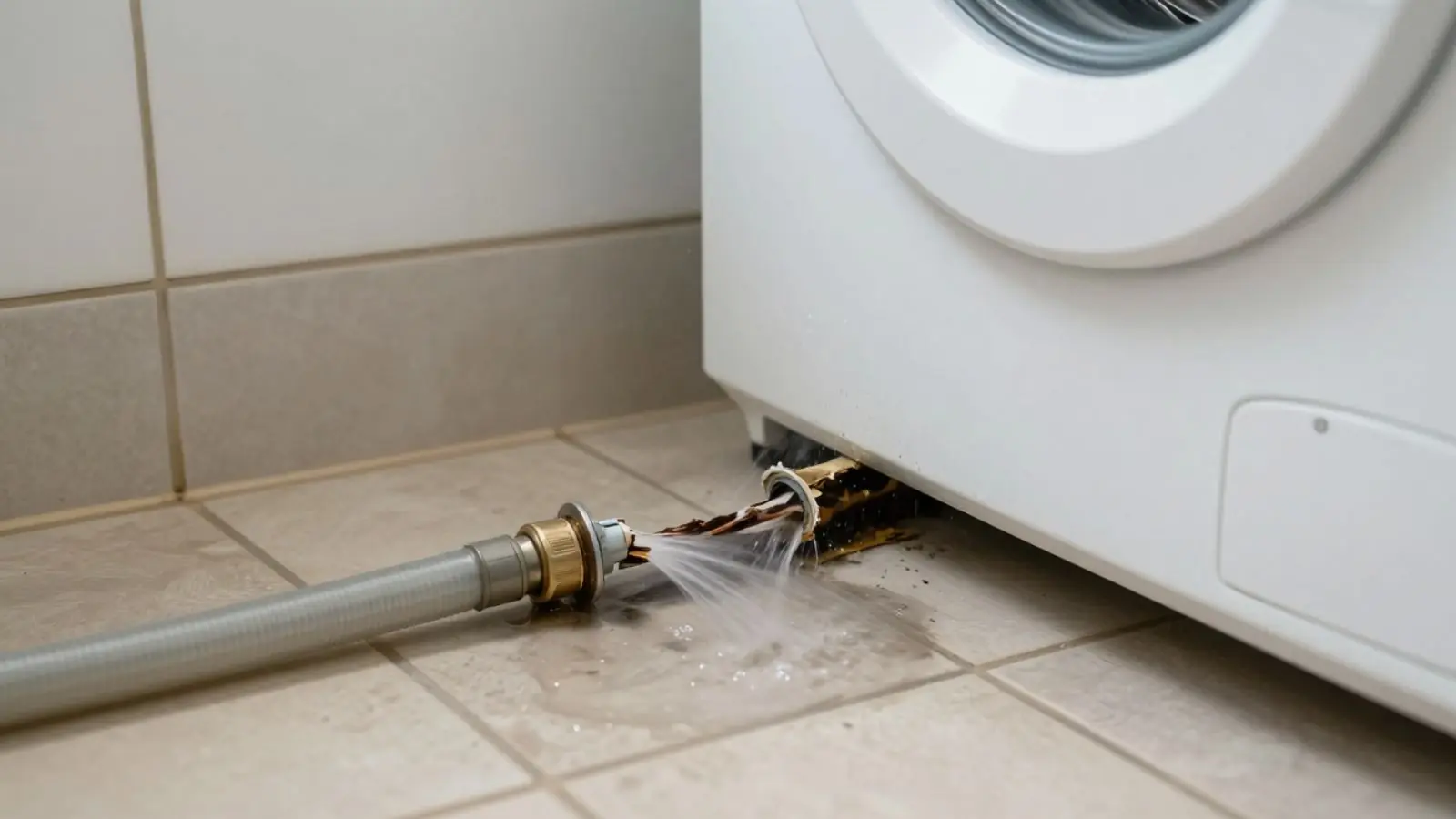
Appliance leaks cause some of the worst water damage in small homes because they run quietly. A washing machine hose lets go while a load spins. A dishwasher seal weeps for months. An ice maker line drips behind a refrigerator, and a laundry closet drain pan fills and spills into the floor. If water is still spreading, call the 24/7 line before you read further.
In College Park the machine is often not yours alone. Stacked laundry closets, shared walls and an upstairs unit over a neighbor's ceiling mean one failed hose can reach two or three households. That changes what you do in the first hour and who you need to tell.
How Appliance Leaks Happen in College Park Homes and Apartments
Most appliance floods start at a short list of parts. Rubber washing machine hoses stay under line pressure all day, even when the washer sits idle, and they age at the connection. A dishwasher has an inlet valve, a pump seal, a door gasket and a drain hose that can each fail slowly.
- Washing machine hoses with bulging sides, rusty fittings or a kink behind the machine.
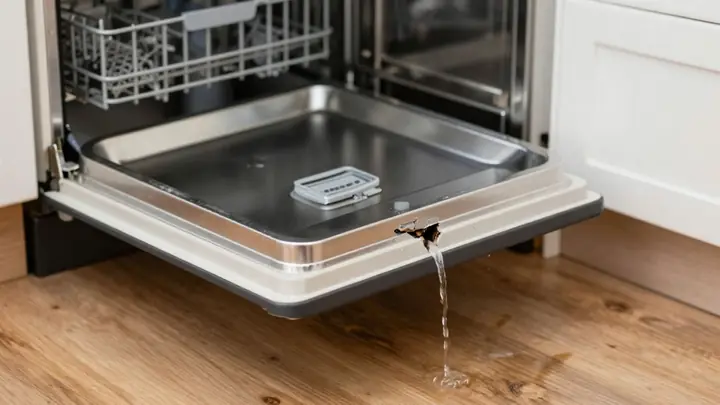
- Dishwasher door gaskets, inlet valves, pump seals and drain hose connections.
- Ice maker and refrigerator supply lines with a loose fitting or tubing crushed when the unit was pushed back.
- Laundry closets with a clogged standpipe, a full drain pan or a floor drain that does not drain.
- Upstairs units, where the same failures send the water into the ceiling below.
College Park housing and rentals
The U.S. Census Bureau's American Community Survey for 2020 to 2024 puts the owner-occupied housing rate in College Park at 34.0 percent. The remaining households rent, which is why so many appliance leaks here involve a landlord, a property manager or a neighbor below.
The City of College Park says any property that houses people other than the owner or the owner's immediate family needs a Residential Occupancy Permit. The City also says its Department of Public Services makes annual inspections of rental properties and inspects when a tenant complains about a possible housing code violation.
Prince George's County's single-family rental licensing page lists College Park among the municipalities it does not license. For a rental house or apartment here, the City is the office to ask about rental rules.
What an Appliance Leak Looks Like Before the Puddle
Slow appliance leaks leave clues long before water reaches the middle of a room. Check the floor in front of the machine, the wall behind it and the ceiling in the unit below.
| What you notice | What it usually means | Where to look |
|---|---|---|
| Soft or bouncy floor at the front of the machine | Water has soaked the underlayment or subfloor | Flooring edges and the base trim |
| Musty smell in a closed laundry closet | Moisture has been present for days or weeks | Behind the machine and inside the closet walls |
| Brown ring or sag on the ceiling below | Water came through the floor from the unit above | The ceiling under the laundry or kitchen |
| Warped baseboard or bubbled paint near the washer | Water is wicking up the wall | Drywall within a foot of the floor |
| Water on the floor only while the machine runs | A hose, drain or pump leak under load | Hose ends, standpipe and pump housing |
A moisture meter reading on site shows how far the water actually went.
First-Hour Safety: Shut Off, Unplug, Tell Someone
- Close the water. A washer has two quarter-turn valves on the wall, one hot and one cold. Turn each clockwise until it stops. If a valve will not move, shut the main supply for the home or unit.
- Think about power before you step in water. Unplug the appliance only if the outlet and the floor around it are dry. If water has reached an outlet or a power strip, shut off the circuit at the panel only if you can reach it standing dry, and otherwise call 911 or the electric utility.
- Stay out from under a ceiling that bulges or sags in the unit below. It holds water and can come down at once.
- Photograph the machine, the hose or fitting, the floor and any stains before you mop. Add a short video.
- Tell your landlord or property manager in writing right away, and tell the neighbor below. Keep a copy of the message.
- Call the 24/7 line. We explain the first steps and send a crew as soon as one is available.
Water coming through a neighbor's ceiling? Call now and we will talk through the first steps while a crew is arranged.
☎ Call (301) 936-0619How We Dry After an Appliance Leak
The job begins with finding where the water went. A moisture meter and a thermal camera map the floor, the lower wall and, in an apartment, the ceiling below. Surface water comes up first with wet vacuums and extractors, the same method described under emergency water removal.
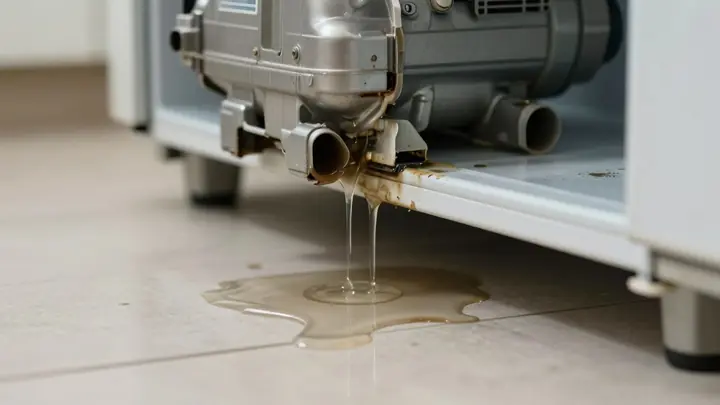
Then we open what holds water. That can mean pulling base trim, lifting a few feet of sheet vinyl at the laundry closet, or cutting small access holes in the ceiling below so air can move through the cavity. Air movers push dry air across the wet layers and LGR dehumidifiers pull the moisture out of the room. HEPA air scrubbers run if demolition raises dust.
Readings are logged at each visit until the materials return to normal. That follows ANSI/IICRC S500, the industry reference for water damage restoration, and the wider method is on our water mitigation page. If a plumber is needed to replace a hose, valve or standpipe, we tell you so. We dry and restore the building. We do not repair the appliance.
What Changes the Cost of an Appliance Leak Job
- How long the water ran before anyone noticed, since a slow leak soaks more layers than a sudden spill.
- Which floors and ceilings are wet, and whether a second unit is involved.
- The flooring type, because sheet vinyl, laminate and tile over a subfloor each dry differently.
- How many days of drying equipment the readings call for.
- Whether wet drywall or ceiling material has to be removed and rebuilt afterward.
Scope and price are explained before work starts. We do not publish dollar figures, because a number without a site visit is a guess.
Appliance Leaks, Landlords and Insurance
Insurance treats a sudden failure differently from a leak that went on for months. Sudden and accidental water damage is often covered, while gradual seepage and lack of maintenance often are not. Policies commonly pay for the resulting damage rather than the failed appliance. Check your policy and ask your insurer, who decides coverage.
Renters usually carry a policy for their belongings, and the landlord carries one for the building. When water reaches a neighbor, several households and insurers may be involved. Photos, dates and written notices help all of them, and our crew records moisture readings and work done so the paperwork matches what happened.
The same crews dry appliance floods in Hyattsville and Greenbelt, in houses and apartments alike.
Prevention and Mistakes to Avoid
- Do not run the machine again to see whether it still leaks. A second cycle adds a full load of water to a wet floor.
- Do not shove a washer or refrigerator back against its lines before checking for kinks.
- Replace aged rubber hoses with braided ones, and look at the connections whenever you move the machine.
- Close the washer valves when you travel for more than a day or two.
- Keep the laundry closet drain pan clear, and pour a bucket of water down the floor drain once a year to test it.
- Treat a damp smell near any machine as a warning. It points to moisture you cannot see.
A small water alarm on the floor behind the machine reports a leak while it is still small.
Found a leak behind a machine? Call before the floor warps. The line is open day and night.
☎ Call (301) 936-0619Appliance Leak Questions
Yes. The 24/7 line is open every hour, and we offer same-day response when available. We do not promise an arrival time, but we will tell you what to do while a crew is arranged.
It depends on your lease, the cause and the policies involved. Tell your landlord in writing, photograph everything and contact your insurer. We cannot give legal advice, and your insurer decides coverage.
Usually several days, and the moisture readings decide when it is done, not the calendar. Water that reached the subfloor or the ceiling below takes longer than a spill on a dry floor.
Wait until the cause is found and fixed. Running a leaking machine puts more water on a floor that is still wet. A plumber or appliance technician can confirm the repair.
The City says its Department of Public Services inspects rental properties each year and also responds when a tenant complains about a possible housing code problem. Start by telling your landlord in writing and keep a copy.