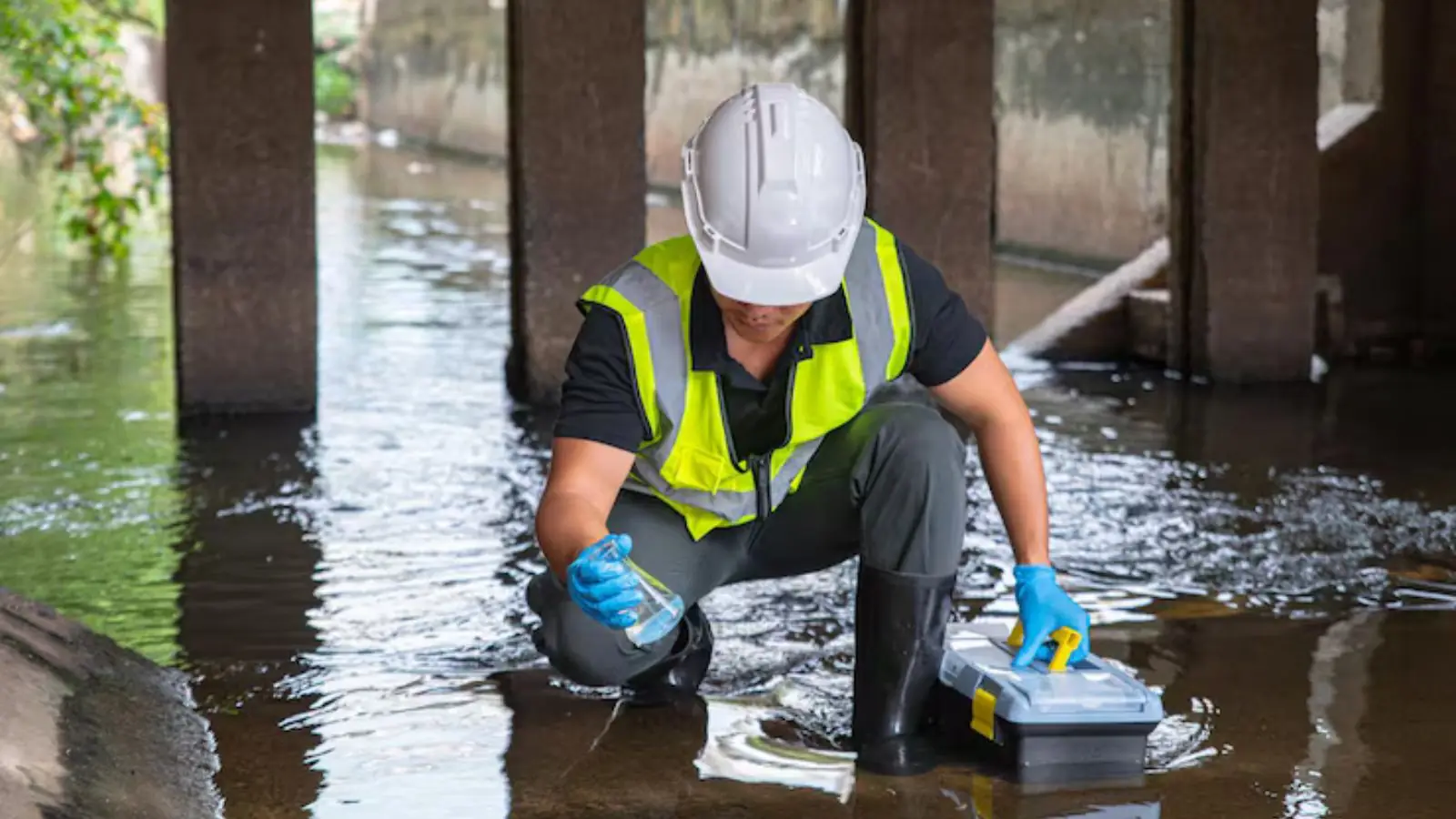
Standing water is an emergency, and the 24/7 line is open as you read this. Before you call, close the main water valve if a pipe has burst, switch off the appliance that is leaking, and keep everyone out of water that may touch outlets. If the panel or outlets are wet, call the electric utility or 911 first.
Emergency water removal in College Park means pulling standing water out of a building with pumps and extraction units, and then moving straight into drying. Water extraction is the same work. The goal is to get the bulk of the water out in the first hours, because every hour of contact soaks deeper into drywall, subfloor and framing.
When Standing Water Is an Emergency
Standing water is an emergency when it is still rising, when it covers a floor, when it has reached electrical equipment, or when it came from a drain, toilet or creek. Clean supply-line water is the easiest to handle, but it turns more difficult each day it sits. Sewage and flood water need protective gear from the first minute.
- Water over the floor of a basement, crawl space or ground-floor room.
- Water running from a ceiling after a burst pipe or roof leak.
- Water backing up from a floor drain, tub or toilet.
- Carpet that squishes underfoot, or water pooling under a wall.
Burst Pipe Water Damage
A burst pipe is one of the fastest ways to get a large amount of water into a building. Supply lines run at household pressure, so a split in a line can release gallons every minute until the valve is closed. The first move is always the shutoff, found where the water line enters the building and often near the water meter.
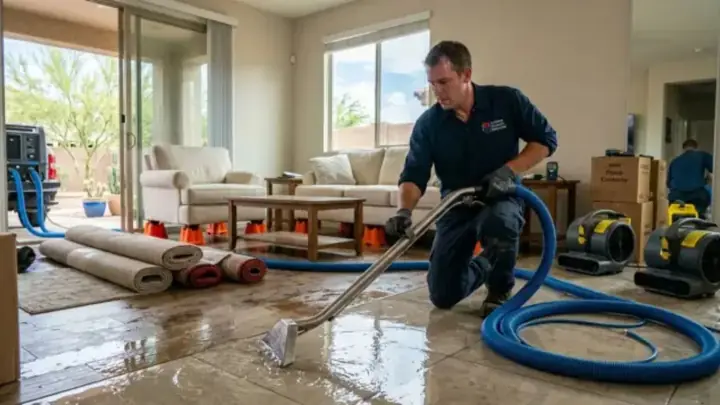
After the valve is closed, open a faucet at the lowest point to drain the line and ease pressure. Then call. Crews extract the water, open the wet wall or ceiling to find the failure, and dry what the water reached. Repairing or replacing the pipe is plumbing work, and the Maryland Insurance Administration notes that a sudden burst is generally covered for the water damage but not for fixing the pipe itself.
How Water Is Removed: Pumps, Extraction Units and Moisture Checks
Deep water is pumped out with submersible pumps. After the depth drops, truck-mounted or portable extraction units pull water from carpet, pad and hard floors. A wand tool can lift water trapped in flooring and cabinets, and squeegees and wet vacuums clear the edges.
Extraction does not leave a room dry. Even after the surface water is gone, drywall, subfloor and insulation hold moisture, which is why the work continues into water mitigation with air movers and dehumidifiers. A moisture meter and a thermal camera show where water remains.
| Situation | First move | What the crew brings |
|---|---|---|
| Burst supply line | Close the main valve, open a low faucet | Pumps, extraction units, moisture meters |
| Flooded basement | Stay out if power is on, call the utility if unsure | Submersible pumps, protective gear, extraction |
| Washer or dishwasher overflow | Shut off the supply and unplug if dry | Extraction units, moisture mapping, dryers |
| Sewage backup | Keep people and pets out, do not clean it yourself | Protective gear, extraction, sanitizing plan |
Each job is adjusted on arrival. Steps shown are the general order.
Basements and Crawl Spaces
Basements and crawl spaces are the hardest places to dry because water collects in them and air barely moves. Pumps work from the lowest point and are placed so the water does not drain back. A flooded crawl space also needs the insulation and any exposed vapor barrier checked, since wet insulation holds water against the floor above.
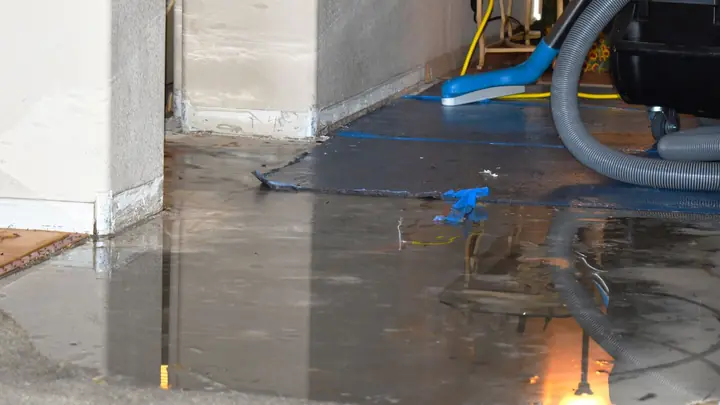
Water in a basement can come from a plumbing failure, from storm runoff, or from the sewer. WSSC Water says the property owner maintains the sewer service line from the property line to the building, and its 24-hour sewer backup line is 301-206-4002. Keep photos and video before cleanup so the loss is on record.
Standing water in your basement or crawl space? Call now and we will walk you through the first safe steps.
☎ Call (301) 936-0619Emergency Removal in College Park Neighborhoods
College Park sits where Paint Branch and Indian Creek meet, and the city drains toward both. In Calvert Hills, City Council minutes from January 11, 2021 describe stormwater entering houses during the September 10, 2020 rain event. Prince George's County has a storm drainage project there, and the County says it is not a solution to every flood event.
Off campus, burst lines in the winter and failed appliance hoses in rental units are frequent reasons for a call. Near Route 1, shared commercial buildings add sprinkler and roof-drain leaks. These cases are different in water source and building type, and the response is still the same: stop the source, extract, then dry.
What Drives the Cost of Water Removal
Cost follows depth and duration of the water, how much has to be pumped, whether the water is clean or contaminated, and how far it spread through the building. A small spill caught right away is small. A flooded finished basement with soaked drywall is large. Scope and price are explained before work starts, and no exact prices are posted here.
For insurance, check your policy and ask your insurer. Photos and moisture readings make the record clearer. For what comes next, see water damage cleanup for removing soaked materials and Hyattsville for coverage southwest of College Park.
Standards Behind Water Extraction
Extraction and drying practice is published in the ANSI/IICRC S500 standard, which is also where the water categories used on this page come from. FEMA's flood cleanup guidance adds a reminder to document damage with photos before discarding anything.
Emergency Water Removal Questions
Yes. The emergency line is open 24 hours a day, every day. Call (301) 936-0619 with the address and what is happening. Same-day response is offered when available, and an arrival time is not guaranteed over the phone.
Close the main water valve if the source is a supply line and shut off any leaking appliance. Turn off power to wet areas only if the panel is dry and reachable, and lift valuables off the floor. Take photos and video before anything is moved.
Drywall and subfloor start soaking up water immediately. The EPA advises drying water-damaged materials within 24 to 48 hours to prevent mold growth, so removal should start as soon as possible.
Removal is the extraction stage, getting standing water out. Mitigation includes extraction and adds moisture mapping and structural drying. See water mitigation for the drying stage.
WSSC Water says the owner maintains the sewer service from the property line to the building, and WSSC maintains the main. WSSC decides responsibility case by case. Its 24-hour sewer backup number is 301-206-4002.