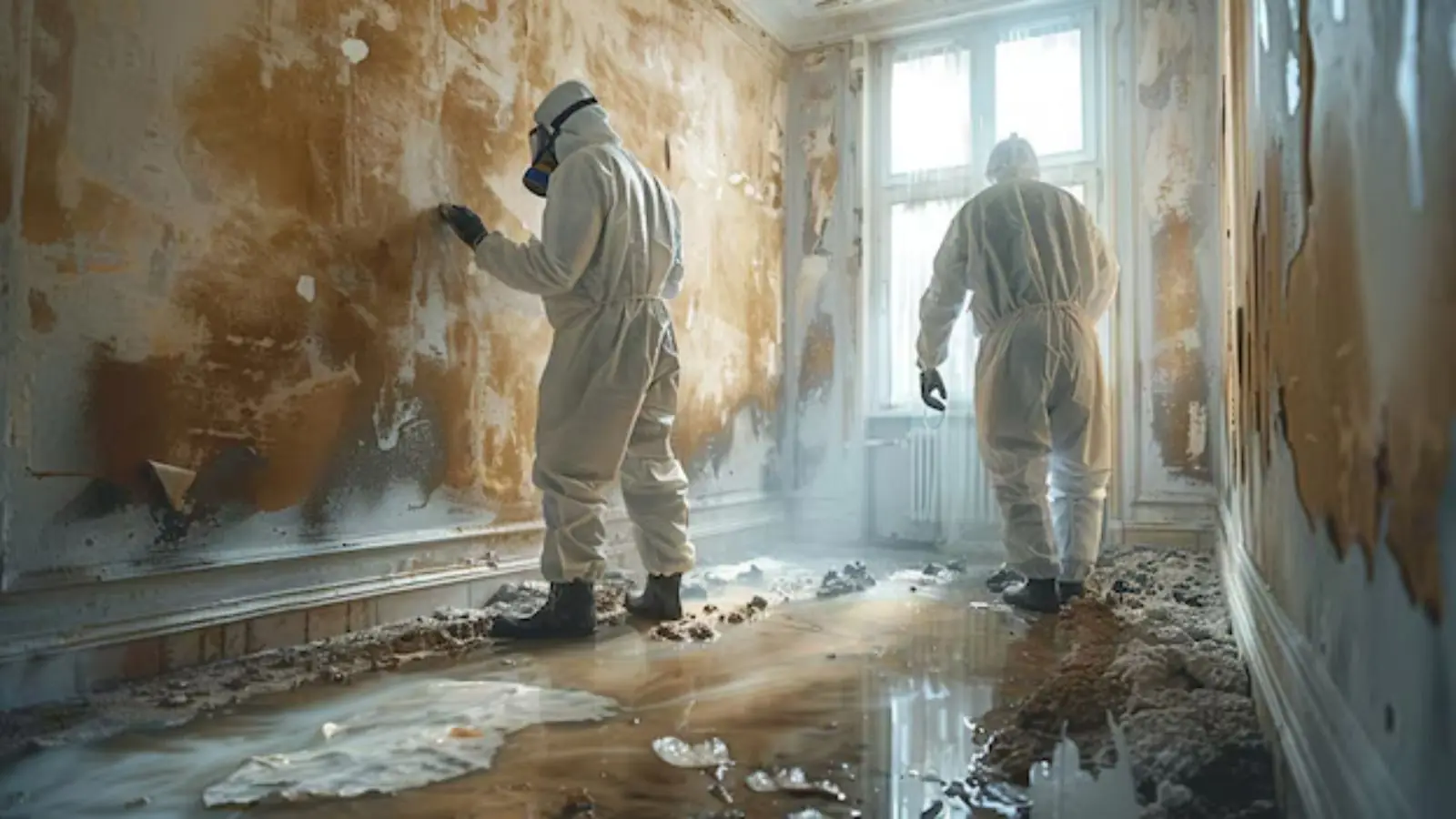
Mold remediation in College Park is the process of finding why a space stayed wet, fixing that water problem, and then containing and removing the mold growth. Mold cannot grow without moisture, so a plan that skips the moisture source will see the mold return. The published ANSI/IICRC S520 standard is the industry reference for mold remediation, and it is fair to ask any company whether its crews work to it.
Mold usually follows a leak. Common sources are an upstairs toilet, a sink drain, an air conditioner condensate line, a roof or siding leak, or a basement that stayed damp. This page covers what remediation involves, how testing fits in, and what you can do yourself.
Musty Smell, Dark Spots or a Closet That Stayed Wet?
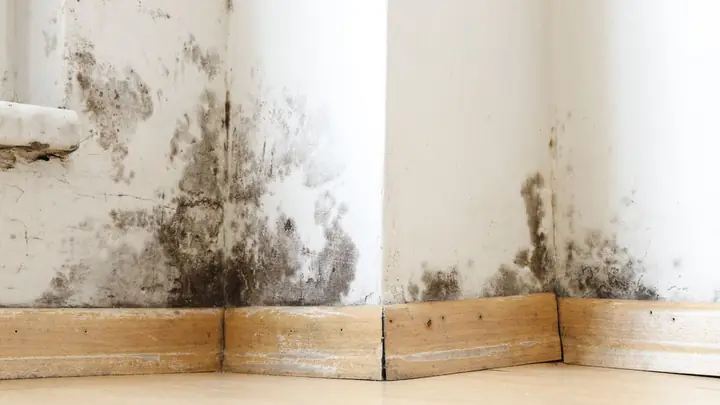
People rarely search for remediation. They search for a smell in a basement, black spots in a shower corner or a stain in a closet wall. Those are all symptoms of the same thing, which is moisture that stayed in a building long enough to support mold growth. Remediation is the trade name for the work that deals with it.
Mold After Water Damage
The EPA advises drying water-damaged areas and items within 24 to 48 hours to prevent mold growth. When drying is delayed, mold can start on drywall, wood, carpet and insulation. That is why water mitigation is the first defense and remediation is what follows when mitigation came too late or was never done.
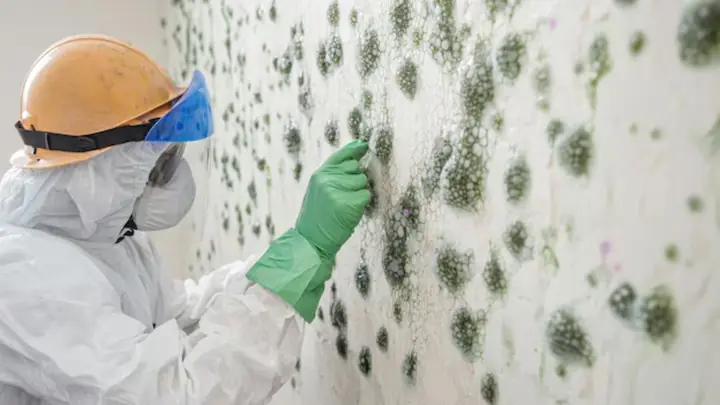
The first step in any remediation is to find and fix the moisture source, whether that is a plumbing leak, a roof defect or high indoor humidity. The EPA suggests keeping indoor humidity below 60 percent, and ideally between 30 and 50 percent. Without that step, any cleanup is temporary.
Mold Removal and Black Mold Cleanup
Black mold is a common name for dark-colored mold. Whatever the color, the cleanup approach is the same. Contain the area with plastic barriers, run negative air with HEPA filtration, remove materials that cannot be cleaned, clean hard surfaces, and dry everything.
The EPA says porous materials such as ceiling tiles and carpet may have to be thrown away if they become moldy, because mold can be difficult or impossible to remove from them. Hard surfaces can usually be scrubbed with detergent and water and dried completely.Dead mold is removed too, not just killed, because the goal is to take the growth out of the building.
Inspect
Locate the moisture source and the extent of growth.
Contain
Plastic barriers and negative air keep spores out of clean areas.
Remove
Materials that cannot be cleaned come out and are bagged.
Clean and dry
Hard surfaces are cleaned, and the area is dried to a dry reading.
Mold Testing, Inspection and Clearance
The EPA says that in most cases, if visible mold is present, sampling is unnecessary, and that there are no federal limits for mold in a building. Testing can still be useful in specific situations. After cleanup, sampling can help confirm the work was effective. Independent clearance testing, done by a third party, is common when a lender or buyer asks for proof.
If a lender will not fund a purchase until mold is removed, ask what proof they accept. Some want a written clearance from an independent tester. We do not promise that a lender will accept any document, and the independent tester should not be the same company that did the removal.
| Question | Usual answer | What to do |
|---|---|---|
| Is visible mold present? | Sampling is usually unnecessary | Fix moisture, then remove |
| Is the area under about 10 square feet? | EPA says it can often be handled by the homeowner | Wear protection, scrub hard surfaces, dry fully |
| Is the area larger or the water damage heavy? | EPA suggests consulting a professional | Call for an inspection |
| Did sewage or flood water cause it? | Contaminated water needs a professional | Call before cleaning |
| A lender or buyer wants proof? | Independent clearance testing is common | Ask what document they accept |
Figures are from EPA guidance on mold cleanup in homes. Health questions belong to a physician.
Not sure whether it is mold or how large the area is? Call and describe what you see.
☎ Call (301) 936-0619When You Can Clean Mold Yourself and When You Should Not
The EPA says mold areas smaller than about 10 square feet, roughly a 3 foot by 3 foot patch, can usually be handled by the homeowner. Use detergent and water on hard surfaces, dry the area fully, and throw away moldy porous items. Wear an N-95 respirator, goggles and gloves, and keep the HVAC system off if it may be contaminated.
Larger areas, mold that returned after cleaning, mold in the HVAC system, and any mold that followed sewage or flood water should be handled by a professional. Health concerns should go to a physician, and we do not make health claims or diagnose anything. Remediation does not promise that mold will never return. It removes the growth and corrects the moisture.
Mold in College Park: Humid Summers and Wet Basements
College Park has a humid subtropical climate, with hot and humid summers, which keeps indoor humidity high without air conditioning and a dehumidifier. In the creek lowlands and older neighborhoods, a basement that stays damp is a common starting point. Closets against exterior walls, bathrooms without a working fan, and rooms under a roof leak are others.
The September 10, 2020 storm in Calvert Hills, described in City Council minutes from January 11, 2021, is a reminder that water can enter fast and sit. Anything that stays wet more than a day or two deserves a check. The City says that in most cases home work needs a permit. Ask whether your state licenses mold work before you hire.
What Drives the Cost of Mold Remediation
Cost depends on the size of the affected area, the materials involved, the access, the containment needed and whether the moisture source is already fixed. A small closet is a small job and a finished basement is a large one. No exact prices are posted here, because a number without an inspection is a guess. Scope and price are explained before work starts.
For insurance, check your policy and ask your insurer. FEMA notes that NFIP flood policies do not cover mold damage, and coverage under a homeowners policy depends on the cause. If mold followed a flood, flood damage restoration explains the water side, and the same crews serve Hyattsville.
Mold Remediation Questions
The EPA says sampling is usually unnecessary when mold is visible. Independent clearance testing, done by a third party, is common after cleanup when a lender or buyer asks. Call to discuss whether it fits your case.
It depends on the area, the materials, the containment and whether the moisture source is fixed. A real number needs an inspection. Scope and price are explained before work starts.
The EPA says areas smaller than about 10 square feet can usually be handled by the homeowner using detergent and water on hard surfaces, with protection. Larger areas, sewage-related mold or HVAC contamination should go to a professional.
Mold needs moisture. If the water problem is fixed and the area stays dry, regrowth is much less likely, but no one can promise it will never return. Humidity control matters.
It depends on the cause and the policy. FEMA notes that NFIP flood policies do not cover mold damage. Check your policy and ask your insurer, and ask whether your state licenses mold work before you hire anyone.