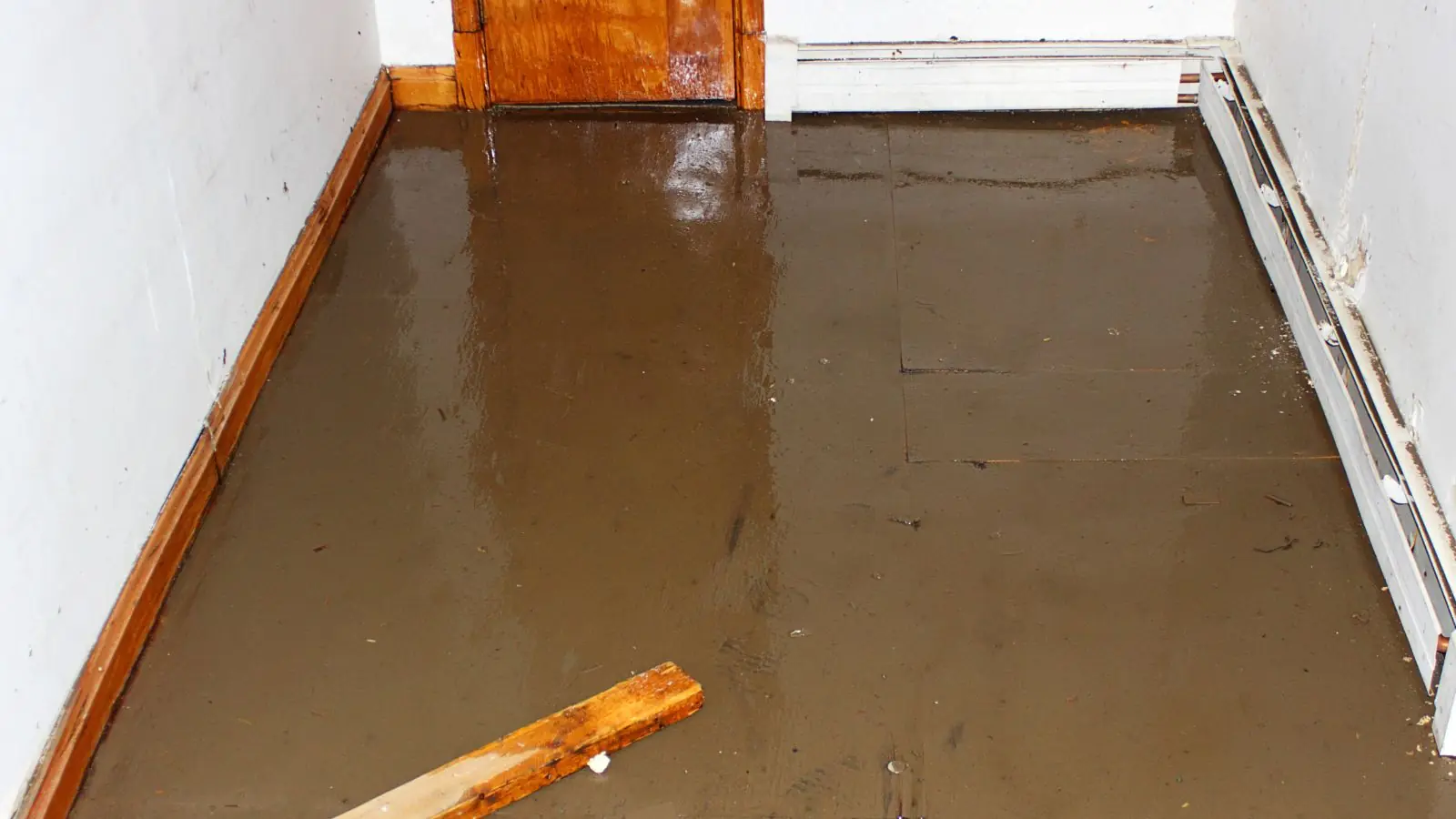
Water in a basement shows up in three ways. A damp wall or floor after rain, water coming up a floor drain, or a flood from a pipe, heater or appliance. Each leaves a different mess and needs a different plan. If there is water on the floor now, call the 24/7 line and stay on the stairs.
Where Basement Water Comes From
Prince George's County's Residential Drainage Manual explains that when the groundwater table sits above the basement floor slab, water pressure builds on the outside walls, and that sump pumps relieve that pressure on walls and floors.
It also estimates that 90 percent of homes with cinder block basement walls will leak within their first 25 years. Block walls let water through mortar joints, cracks and hollow cores, and it often arrives as a damp stripe low on the wall.
The same manual lists the other usual routes. Ground that slopes toward a window well fills the well and then the room. Uncovered wells collect rain and leaves. A floor drain can push water up when a line is overloaded, and the manual says a one-way valve or backflow preventer may correct that. A sump pump that stops during a storm, or a pit that is too small for the inflow, lets the floor flood.
Plumbing causes belong on the list too. The water heater, a washer hose, a supply line under the stairs and a cracked drain stub all discharge straight onto the floor below the rest of the house. Where the water came from decides how it is handled.
Reading the Water: Damp, Seepage, Backup or Flood
| What you see | What it usually means | How it affects cleanup |
|---|---|---|
| Damp stripe along the base of a block wall | Seepage through mortar joints or hollow cores | Dry the wall and floor, and clear anything stored against it |
| Water around the sump pit | Pump failure, a stuck switch or too much inflow | Restore pumping first, then extract and dry |
| Puddle under a window well | The well fills faster than it drains | Extract, then clear and cover the well |
| Water or sludge at a floor drain | Backup, which may be contaminated | Treat as sewage and keep people out |
| Water on the floor with a warm or wet ceiling above | Supply line, heater or appliance | Stop the valve, then extract and dry |
Photos of each sign help your insurer and help the crew plan.
An unfinished basement with bare concrete and block is the easier job. Little in it holds water. A finished basement has carpet, pad, drywall, insulation and trim, and often a framed wall set against the block with an air gap behind it. That gap can stay damp for a long time if nobody opens it.
Basement Water Safety Before You Go Downstairs
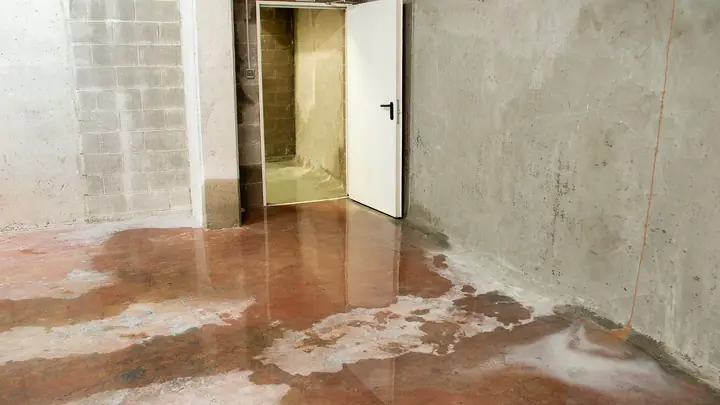
Stay on the stairs, out of the water
A basement usually holds the electrical panel, furnace, water heater and washer outlets. Water over the floor can energize things you cannot see. If the water is above outlet height or touches the panel, stay out and call the electric utility or 911.
If a pipe or heater is the source, close its valve or the main water valve upstairs. If water came up through a drain, treat it as sewage, keep people and pets away and do not run a household vacuum in it. For a gas smell, leave the house and call 911 from outside.
Water in your basement right now? Call the 24/7 line and we will walk you through the first steps.
☎ Call (301) 936-0619How We Extract and Dry a Wet Basement
Pumping begins at the lowest point with a submersible pump, the same extraction work described on the emergency water removal page, followed by extraction units that lift water from carpet, pad and hard floors. When floodwater is also standing outside the house, FEMA advises pumping in stages, taking out about a foot of water, marking the level and waiting overnight. It warns that draining too fast could collapse cellar walls, floors and foundation.
After the water is out, moisture meters and a thermal camera map the walls and floor. Air movers and LGR dehumidifiers dry what stays. HEPA air scrubbers run when wet material is being removed or a drain backed up. Moisture goals are set against readings from a dry part of the same house, as the ANSI/IICRC S500 standard describes it.
| Material | Usually | Why |
|---|---|---|
| Concrete floor and block walls | Dry in place | Masonry releases water to moving, dehumidified air |
| Carpet pad | Comes out | It holds water and costs little to replace |
| Carpet | Depends on the water | Clean water can sometimes be lifted and dried, contaminated water cannot |
| Drywall | Cut where wet or wicked | Paper-faced board holds water above the visible line |
| Insulation in stud walls | Comes out when wet | It stays soaked against the framing |
| Wood studs and plates | Dry in place | Framing dries well once the cavity is open |
| Stored cardboard and fabric | Discard after photos | It cannot be cleaned or dried reliably |
The decision for each item is made from readings and the category of water.
What Changes the Cost of Basement Cleanup
The category of water sets the protective gear and which finishes must go. The depth and how long it sat set the extraction work. Finished space adds demolition, haul-away and more drying days than bare concrete. Access down the stairs, the size of the room and how many walls need to be opened all add up. The price is laid out for you before pumps go in.
Insurance and Basement Water
The Maryland Insurance Administration says a homeowners policy may cover water or sewer backup only if you bought a backup endorsement, and that Maryland law requires insurers to offer one. The same agency says seepage problems are treated as maintenance and generally not covered. A sump pump that overflows is a backup question, so read your policy or ask your agent which applies.
For a loss in a rented unit, tell the landlord in writing and keep your photos, because the landlord's insurer and yours may both ask for them.
Mistakes and Prevention in a Wet Basement
- Walking in water to reach the panel or the pump.
- Draining a flooded basement all at once while the ground outside is saturated.
- Leaving wet carpet pad in place because the top layer looks dry.
- Painting or sealing a wall before it has been measured dry.
- Treating a drain backup like clean water.
For prevention, the County manual says window wells should have covers and the ground beside them should slope away from the house. It says a sump outfall belongs at least 8 to 10 feet from the foundation wall. If your house is five years old or less, the County's Department of Permitting, Inspections and Enforcement runs a drainage complaint program for open grading permits.
Not sure how wet the basement walls are? Call and we will explain how readings are taken.
☎ Call (301) 936-0619Basement Calls Beyond College Park
We cover basements in Greenbelt and Beltsville too. When the water is a whole-house event rather than one room, flood damage restoration covers the wider response.
Basement Water Questions
Yes. Call (301) 936-0619 at any hour, any day. A crew comes the same day when one is available, though we cannot promise a time on the phone. Tell us where the water sits and where you think it came from.
Only if the power is off and the panel is dry. FEMA advises lowering a flooded basement in stages when water is also outside the house, because draining too fast can damage walls and floors. A crew pumps at a safe pace and moves straight to drying.
Sometimes. Clean water from a supply line can often be extracted and dried if it is caught early. Carpet that sat in drain or flood water is usually removed, and pad almost always comes out.
Not automatically. The Maryland Insurance Administration says coverage for water overflowing a sump pump depends on whether you have a water and sewer backup endorsement. Ask your insurer before the cleanup contract is signed.
Prince George's County's Department of Permitting, Inspections and Enforcement runs a drainage complaint program for homes five years old or less with open grading permits.