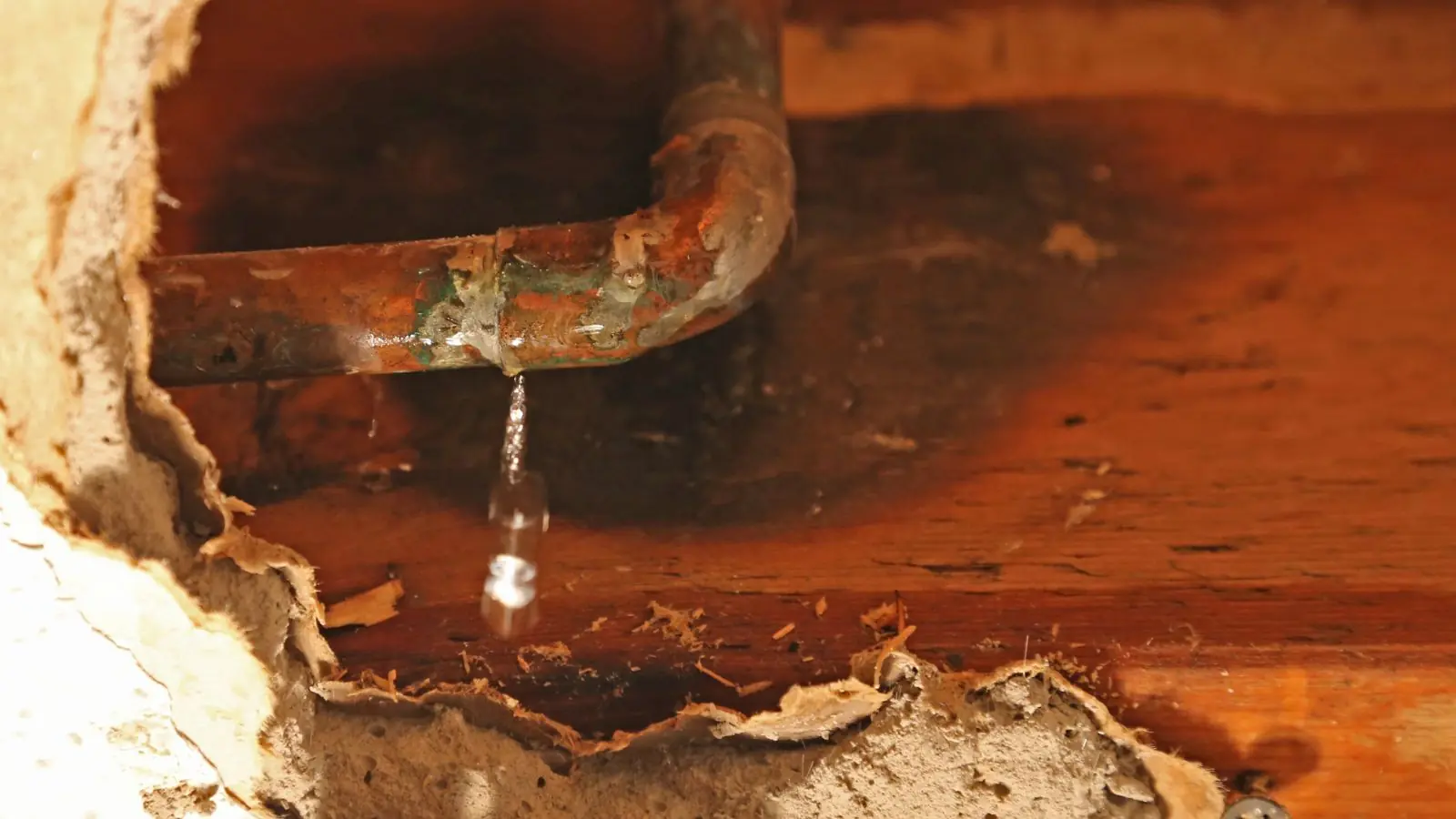
A burst pipe is a supply line or fitting that has split under pressure and is now pushing water into a wall, floor or ceiling. Unlike a slow drip, it floods fast. If water is running right now, close the main valve, then call (301) 936-0619. We handle the water removal, the drying and the rebuild. A plumber handles the pipe itself.
How Pipes Fail in College Park Houses and Apartments
Most failures start at a joint, a fitting or a fatigued section of older line. Copper develops pinholes and cracked solder joints over the decades. Galvanized steel rusts from the inside until a section gives way. Plastic connectors under sinks and behind toilets let go at the threads. Older buildings often carry patched and mixed piping, so a repair from one decade can sit next to a fitting from another.
According to the U.S. Census Bureau, College Park had about 9,007 households in 2020 to 2024, with an average of roughly 2.69 people each. That is a lot of fixtures running every day, and a lot of shared walls in apartment buildings. A split line on an upper floor often wets a unit below before anyone upstairs notices.
Signs a Pipe Has Burst Inside the Structure
Some bursts announce themselves with a loud bang and a spray. Others hide behind drywall for hours. The table below pairs what you may see with what it usually means, so you can describe the scene clearly when you call.
| What you notice | What it often means | First move |
|---|---|---|
| Sound of running water with every tap closed | A supply line is open somewhere in the walls | Close the main valve and listen again |
| Bubbling paint or a dark stain spreading on a ceiling | Water is pooling above and soaking the drywall | Move belongings, keep people out from under it |
| Warm, damp wall that feels soft | A hot-water line may be leaking in the cavity | Close the main valve and call for moisture mapping |
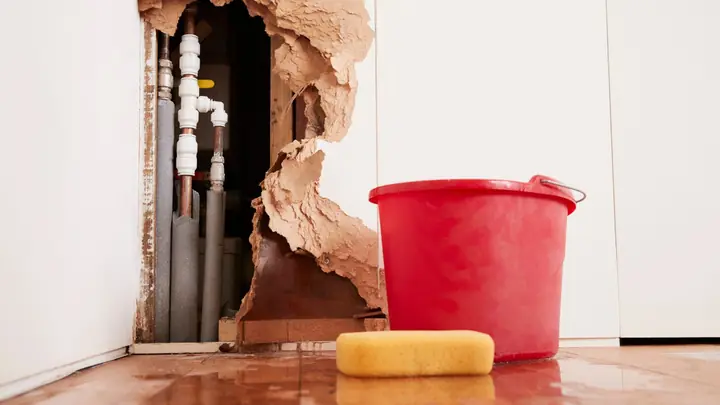
| Water at the base of a wall with no fixture nearby | The break may be inside the wall | Photograph it and keep the area clear |
| Low water pressure across the house | A large leak is taking the flow | Check meter movement with all fixtures off |
Every house is different, and only a moisture reading can show how far the water has traveled.
Water coming from a wall or ceiling? Call the 24/7 line and describe what you see.
☎ Call (301) 936-0619Safety Steps for the First Hour
Do these before anything else
WSSC Water tells customers to locate and operate the main water shut-off valve so they can stop water if a pipe breaks inside the home. Know where yours is today. If it is stuck or buried, call WSSC Water's 24-hour emergency line at 301-206-4002.
If water is near outlets, a panel or a ceiling light, stay clear and call the electric utility or 911 before you touch anything. If a ceiling is bulging with water, keep people away from underneath it.
- Close the main valve and open the lowest faucet to drain the lines.
- Switch off the water heater if the flooded area is near it.
- Move rugs, electronics and paperwork onto dry furniture.
- Photograph the damage and the broken pipe before any cleanup.
- Tell your landlord or building manager in writing if you rent.
Valve closed and water still on the floor? Call now and we will plan extraction and drying.
☎ Call (301) 936-0619How We Dry a Building After a Pipe Break
The first job is removing standing water with pumps and extraction units. Then a technician maps moisture with a meter and a thermal camera, because wet insulation and drywall hide behind clean paint. Where a wall has soaked through, it is opened so air can reach the cavity. Baseboards often come off first, and a few holes along the bottom of the wall may be enough.
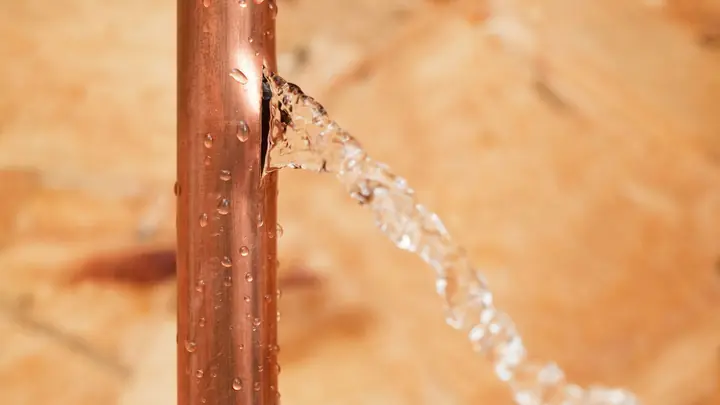
Air movers push air across wet surfaces. Low-grain-refrigerant dehumidifiers pull the moisture back out of that air so drying keeps moving. Technicians return to read the meters and adjust the equipment. Industry practice is described in the ANSI/IICRC S500 standard, and it is fair to ask any restoration company how it follows it.
- Stop the source and extract standing water.
- Map wet areas with meters and a thermal camera.
- Open or remove saturated materials that cannot dry in place.
- Place air movers and dehumidifiers to a drying plan.
- Take readings until the structure reaches its dry standard.
Once the building is dry, water damage repair covers the rebuild of walls, ceilings and flooring, and water mitigation explains the early drying stage in more detail.
Why Clean Water Turns Into a Bigger Problem
Water from a supply line starts clean, which is the best news in any water loss. It does not stay that way. The longer it soaks into carpet pad, insulation and framing, the more the materials break down, and the water picks up dirt along the way. Standards describe this shift as the water moving up a category. That is why fast action changes the scope of the work.
What Changes the Cost of a Burst Pipe Job
- How long the water ran before the valve was closed.
- How many rooms and floors were reached.
- Whether walls had to be opened and for how many feet.
- Which finishes are involved, such as hardwood, carpet or plaster.
- How many days the drying equipment must run.
A small break caught within the hour is a small drying job. A line that ran overnight in a rental building can touch several units. We explain the scope and the price before work starts, and no figure can be quoted without seeing the damage.
How Insurance Usually Treats a Burst Pipe
Policies generally separate sudden and accidental water release from slow leaks and long-term seepage. A split line that floods a room on a single day is often treated differently from a drip that went unnoticed for months. Flood from outside the home is a different matter and may need separate coverage. Policies often treat the cost of repairing the pipe itself separately from the damage the water caused.
Read your policy and ask your insurer what applies to you. We document with photos, moisture readings and notes, which gives the adjuster something to work from.
Mistakes That Make Pipe Damage Worse
- Leaving the main valve open while waiting for a plumber to arrive.
- Turning on a fan and calling it done. Wet walls need measured drying.
- Painting over a stain before the wall is tested for moisture.
- Throwing out wet materials before photographing them.
- Walking through a flooded area with live outlets nearby.
College Park Notes on Pipe Breaks
The 24-hour WSSC Water line at 301-206-4002 handles water main breaks and leaks, according to WSSC Water. If water is gushing in the street or the meter box, call that number before ours.
The U.S. Census Bureau reports College Park households at about 2.69 people on average. In apartment buildings, tell neighbors below you as soon as a line lets go, and keep your own photos.
Not sure how far the water went? Call the 24/7 line and a technician will talk you through it.
☎ Call (301) 936-0619Neighbors in Hyattsville and Greenbelt can reach the same line.
Burst Pipe Questions
Yes. The line at (301) 936-0619 is answered around the clock, including nights, weekends and holidays. Same-day response is offered when available, and no arrival time is promised over the phone.
Close the main valve first. Then call both. A plumber repairs the pipe, and we remove the water and dry the structure. The two jobs can start the same day, and the drying should not wait for the pipe repair to be finished.
Sometimes. If readings show water inside a wall cavity, opening the bottom of the wall lets air dry it. Small openings along the baseboard are often enough. A technician shows you the readings before cutting.
It depends on the materials and how much water spread. Technicians take readings on each visit, and the equipment leaves when the meters show a dry standard, not on a fixed date.
It helps, because supply water starts clean. It still needs fast action, since wet materials degrade the longer they stay wet.