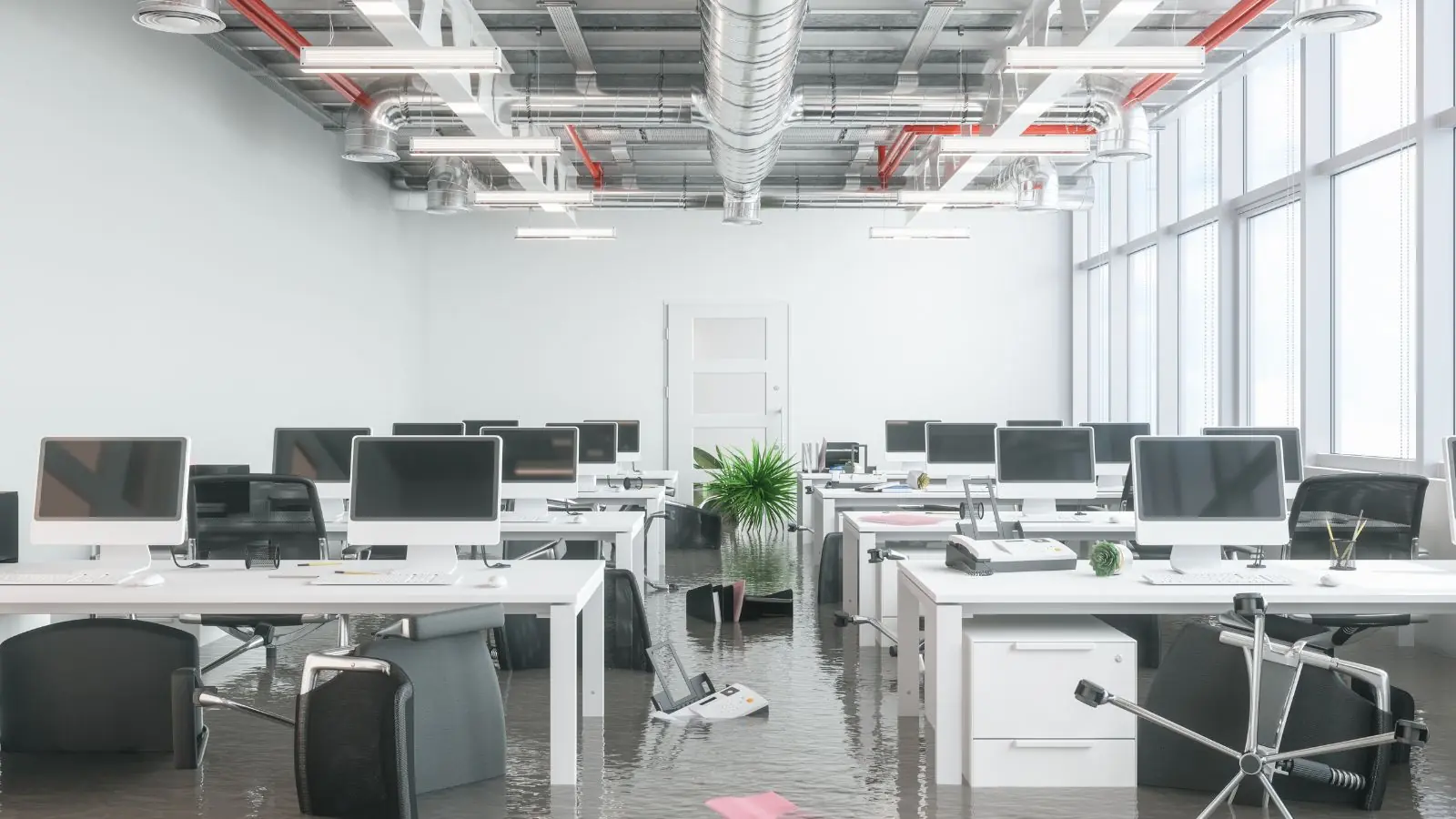
A leak in a commercial building rarely stays in one room. It runs along ceilings, into shared walls and down to the unit below. If you manage or own such a space, call (301) 936-0619 and describe where the water is coming from and what it has reached.
Commercial water damage restoration here means water extraction, structural drying, cleanup and documentation for non-residential buildings. We remove the water, dry what can be saved and keep records. When the source is a roof, a sprinkler line or a plumbing failure, a licensed trade fixes it and we tell you when to bring one in.
Why Commercial Water Damage Looks Different in College Park
College Park is a rental city. The U.S. Census Bureau reports an owner-occupied housing rate of 34.0 percent for 2020 to 2024, which means most households rent. Landlords, property managers and tenants all need answers when water appears, and each needs a different part of the record.
The University of Maryland takes up roughly 41 percent of the city's area, and its edge sits against Baltimore Avenue. Along the Route 1 corridor, shops, offices and apartments often share walls, roofs and drain lines. A failure in one unit can reach another before anyone notices.
| Source | What it tends to wet | What we do |
|---|---|---|
| Roof or drain leak | Ceiling tiles, insulation, top-floor contents | Extract, remove wet materials, dry the space |
| Supply or fixture failure | Floors, shared walls, the unit below | Find the wet path, extract, dry the cavities |
| Sprinkler or fire line discharge | Several rooms at once | Extract in sections, dry in stages |
| Drain or sewage backup | Floors near drains and restrooms | Containment, removal, sanitizing |
General pattern only. Moisture readings on site decide the actual plan.
Signs Water Is Moving Through a Building
Stained ceiling tiles, bubbling paint, warped baseboards and a damp smell near a wall are the usual signs. In an older building the stain can be several feet from the leak, because water follows beams and pipe runs before it shows.
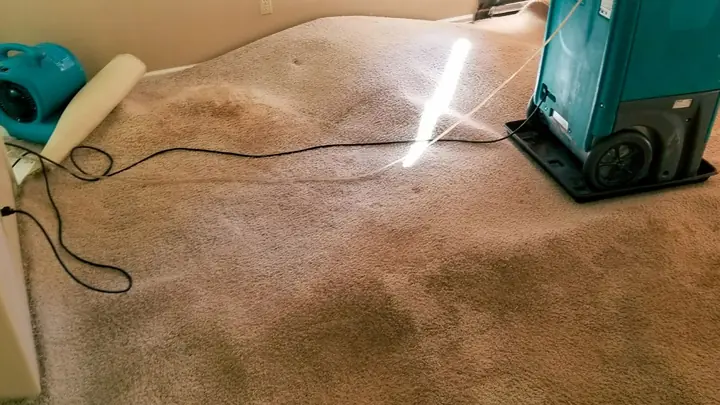
Report what you see to the owner or property manager in writing. If you are a tenant, photograph the damage and move electronics and paper out of reach.
Safety First in a Commercial Space
Treat standing water as an electrical hazard until power is confirmed off. Shared panels and wet ceiling fixtures make that harder to judge in a multi-tenant building.
- Keep staff, tenants and customers out of wet areas, and mark them.
- If water touches outlets, lighting or the panel, step out and phone the electric utility or 911.
- Shut off the water supply to the affected line if it is safe to reach the valve.
- Call the building owner or property manager so the right valves and panels are handled.
- Photograph the damage, the source and affected contents before moving anything.
Water in a commercial space? Call the 24/7 line and describe the building and the source.
☎ Call (301) 936-0619Older Corridor, Shared Buildings
According to the U.S. Census Bureau QuickFacts, College Park had 9,007 households in 2020 to 2024, with 2.69 persons per household. That many households around campus means many buildings hold both homes and businesses.
An EPA smart growth case study says the city adopted a form-based code to guide commercial redevelopment along the US Route 1 corridor, after a 2002 sector plan called for a corridor that is walkable and lively. Older and newer construction now sit side by side.
Mixed ages mean mixed plumbing, roofs and drain layouts. We read each building on site and do not assume what is behind a wall.
Our Process for Commercial Water Damage
The first visit maps the water. A moisture meter and thermal camera show where it traveled, and the crew explains what can be dried and what must be removed before work starts.
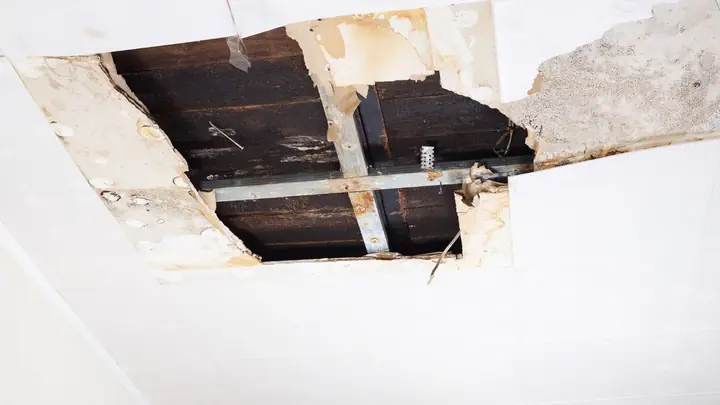
- Extract standing water with truck-mounted or portable extractors.
- Remove wet ceiling tile, insulation, carpet and baseboard that cannot dry in place.
- Place air movers and low-grain refrigerant dehumidifiers, and open wall cavities where readings call for it.
- Read moisture daily and adjust equipment until readings match dry reference materials.
- Clean and, if needed, sanitize, then hand over the records.
Where occupants keep working in other parts of the building, we can stage equipment to leave access open. Work outside regular hours is available when crews can be arranged. We do not promise an arrival time.
What Changes the Cost
Cost follows the area affected, the materials involved, the number of rooms or units the water crossed, and how long drying takes. Water category matters too, because contaminated water adds containment and disposal. Ceiling height, access and after-hours work also change the scope.
Scope and price are explained before work starts. If the plan changes after walls are opened, we say so before we continue.
Insurance and Records for Owners and Managers
Commercial policies vary a great deal. Property coverage, tenant policies and business income coverage may each apply, so check your policy and ask your insurer or broker before work begins. Sudden failures and gradual leaks are generally treated differently.
We keep dated photos, moisture logs, equipment records and a list of removed materials. Owners, managers and tenants can each get the same set. Our related pages on emergency water removal and water mitigation explain those stages.
Mistakes to Avoid
- Do not wait for the next business day to report a leak. Water keeps spreading overnight.
- Do not run fans over wet ceiling tile and call it dry.
- Do not discard damaged contents before photos are taken.
- Do not assume one wet unit means one wet unit. Check neighbors and the floor below.
Buildings in nearby Hyattsville and Beltsville are served by the same line.
Not sure how far the water went? Call and we will explain what to check.
☎ Call (301) 936-0619Commercial Water Damage Questions
Yes. The 24/7 line is answered at (301) 936-0619. Same-day response is offered when available, after-hours work is arranged as crews are available, and no arrival time is promised on the phone.
Often yes. We can stage equipment and set barriers to keep paths open. The plan depends on the layout and where the water traveled.
Dated photos, moisture readings, equipment logs and a list of materials removed. The same set can go to your insurer.
No. We remove water, dry, clean and restore. If a roofer, plumber or other trade is needed, we tell you.
Before work starts. If walls are opened and the scope changes, we explain that before continuing.