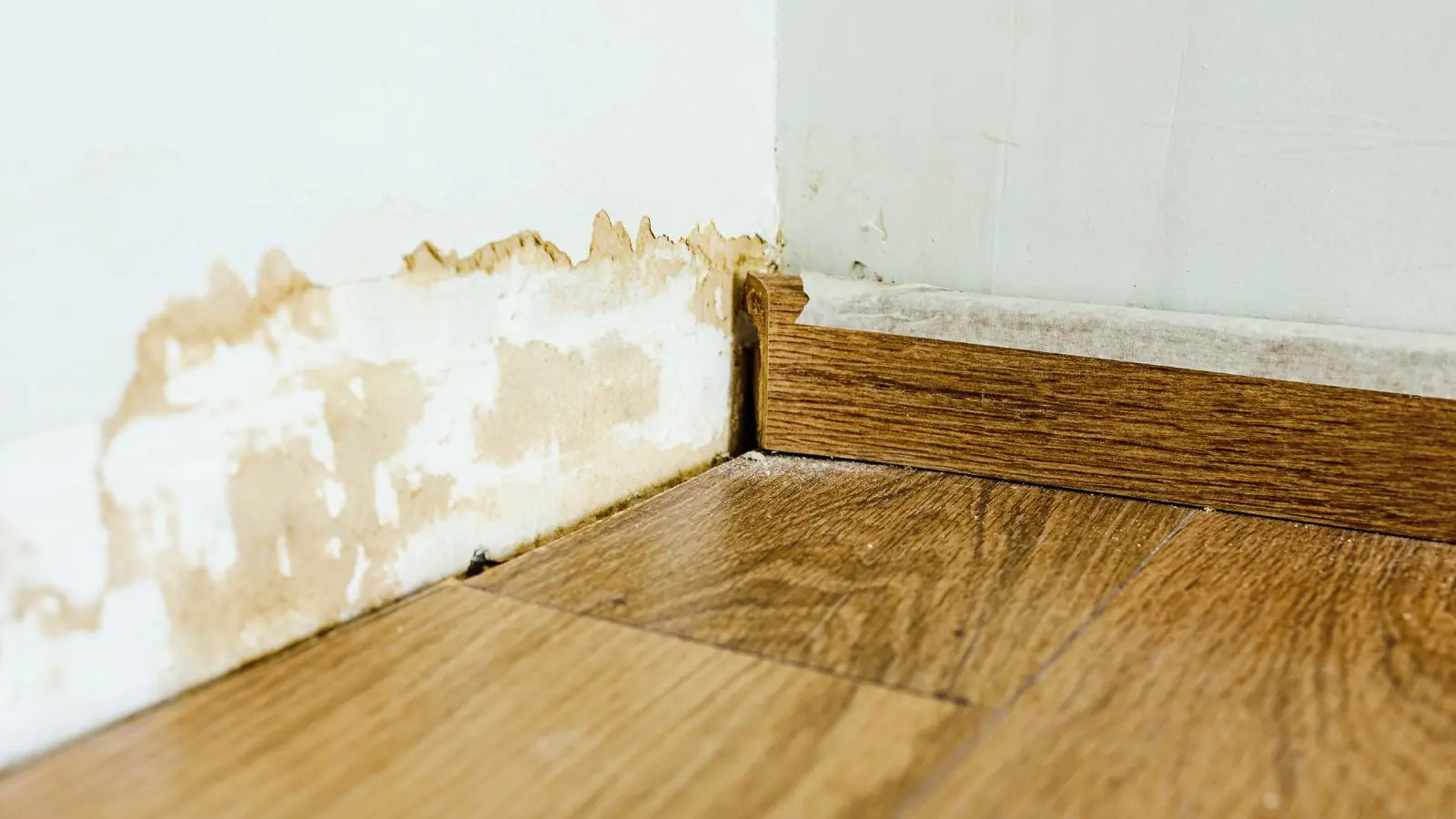
Walls take water differently from floors and ceilings. Water runs down inside them, wicks up through the paper face of the board, and sits in the cavity where nobody can see it. A wall can look fine and read wet. If water is still coming through, close the valve or stop the source first, then call.
How Water Gets Into College Park Walls
Four routes cover most wall damage. A supply or drain line inside the wall fails. A roof, window or siding leak runs down the cavity. An appliance spill or tub overflow soaks the base of a wall. Or flood water rises from the floor. Each produces a different pattern, and each needs a different cut.
Drywall has a paper face, and paper pulls water upward. That is why a flood that stood two inches deep can leave a wall wet well above the line. In older houses the wall may not be drywall at all.
The Maryland Historical Trust listing for Old Town College Park says most residential building there came between the 1920s and the end of World War II. A house from those years may have plaster over lath or later patches of board, and each reacts to water in its own way.
The U.S. Census Bureau reports that 38.2 percent of occupied housing in College Park is owner-occupied, in its 2019 to 2023 estimates. That leaves most households renting, and wall repairs in a rental involve a landlord. See the insurance and rental section below for what to document.
What a Wet Wall Looks Like and What It Means
| What you see | What it usually means | Next step |
|---|---|---|
| Brown ring or tea-colored stain | Water has passed through and dried at the edge | Find the source, because a ring can repeat |
| Bubbling or peeling paint | Moisture behind the paint film | Do not scrape it, have it read first |
| Soft or crumbling board at the base | Gypsum has absorbed water | Plan to cut it out |
| Swollen baseboard or door trim | Wood has taken on water and wicked | Mark how high it reaches |
| Open or lifting tape seams | Moisture has loosened the joint compound | Check the cavity behind the seam |
| Musty smell and no stain | Water in the cavity or insulation | Ask for thermal and moisture readings |
A moisture meter and a thermal camera show the real wet area, which is often larger than the stain.
Wall Water Safety Before You Cut or Press
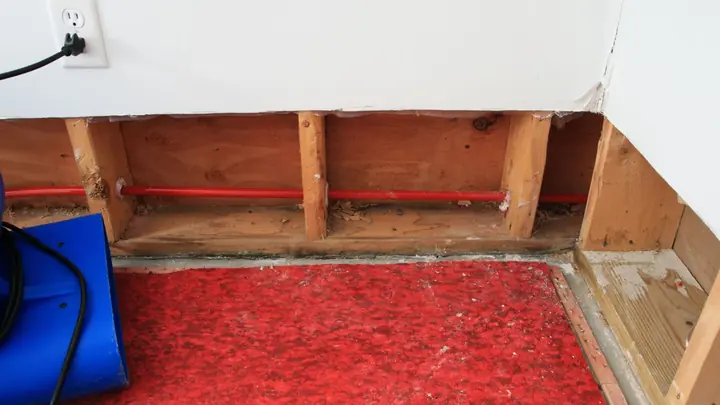
Check the wall before you touch it
A wet wall can hold outlets, switches and wiring. If the outlets are wet or the breaker is tripping, turn off the circuit only if the panel is dry and reachable, and stay away from the wall if you cannot. For a gas smell or sparking, leave and call 911.
Do not drill, press or cut a wet wall to see what is inside. If a pipe is the source, the main shut-off stops the water. If the house was built before 1978, cutting painted walls can fall under lead rules, which the next paragraph explains.
The Maryland Department of Labor explains that the federal Renovation, Repair and Painting rule applies to work on homes built before 1978 that disturbs 6 square feet or more of interior painted surface. It adds that firms working under the rule must be certified by the EPA. Tell us the age of the house when you call, and ask anyone who does the cutting how they handle it.
Not sure if the wall is safe to touch? Call now and describe what you see.
☎ Call (301) 936-0619Cutting, Drying and Closing Up a Wall
The cut starts with measurement. A moisture meter marks where board and framing are wet, and the cut is made above that line, because the paper wicks higher than the eye can see. For a flood cut, the board is removed in a straight horizontal line, and wet insulation behind it comes out too. For a leak from above, the crew may remove only the wet section plus a margin.
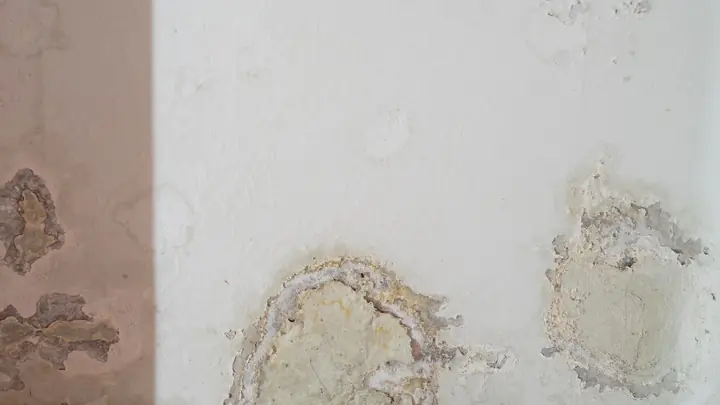
Studs and plates are dried in place. Air movers push air into the open cavity, an LGR dehumidifier pulls the moisture out of the room, and the thermal camera shows when cold, wet spots are gone. Closing up is held until readings on the framing match readings taken from an unaffected wall of the same material, the way the ANSI/IICRC S500 standard frames drying goals.
| Stage | What happens | What to expect |
|---|---|---|
| Cut | Wet board and insulation removed above the wet line | A straight edge that lands on a stud where possible |
| Dry | Air movers and dehumidifiers run on the open cavity | Daily readings until framing reads dry |
| Hang | New board is screwed to the studs and sized to the opening | Fresh seams that line up with the old wall |
| Tape and mud | Joints are taped and coated in thin layers | Each layer dries before the next |
| Prime | A stain-blocking primer seals the new and old surface | Stops water marks from bleeding through |
| Texture | Texture is sprayed or troweled to match | Test patches before the full wall |
| Paint | The whole wall is coated, corner to corner | A single face avoids visible patch edges |
Mud and primer need real drying time between steps. Rushing one shows later.
What Changes the Cost of Wall Repair
The size of the wet area is the main factor, followed by the height of the cut and the number of walls. Insulation, baseboard and trim, outlets that must be moved and any plaster work add time. Texture is another factor. Smooth walls are quick to match. An orange peel or knockdown finish takes test patches and skill. Paint is the last variable, since a whole wall is painted to hide the patch.
You hear the scope and the price first. Drying is a separate stage from rebuilding, and some owners choose to dry now and rebuild later. For the wider repair path after drying, see water damage repair.
Insurance and Rentals for Wall Damage
Insurers decide coverage by cause. A pipe that bursts inside a wall is a sudden event. A stain from a slow drip behind a fixture reads as gradual. Ask your insurer which one your claim fits, take dated photos of the stain, the cut and the readings, and keep every receipt.
If you rent, tell the landlord in writing and send the photos. The Maryland Department of the Environment says owners of rental homes built before 1978 must register with the state and provide valid lead inspection certificates at each tenant turnover. Who pays for repairs depends on your lease and Maryland law, which we cannot decide for you.
Mistakes That Ruin a Wall Repair
- Painting over a stain before the cause is found and the wall is dry.
- Closing up the wall because the surface feels dry to the touch.
- Leaving wet insulation in the cavity and hanging new board over it.
- Patching a small square instead of cutting to a stud line.
- Painting only the patch, which leaves an edge you can see in daylight.
Prevention starts with the lines inside the walls. Look at the base of walls near sinks, tubs and washers every few months, and fix a soft baseboard before it becomes a soft stud.
Have a wall that was wet? Call and we will explain how it gets measured and dried.
☎ Call (301) 936-0619Wall Repairs Beyond College Park
We cover wall water damage in Hyattsville and Beltsville as well. If the same event also damaged the ceiling or the floor, those are separate parts of the job and are planned together during the visit. For drying before any wall is closed, see water mitigation.
Wall and Drywall Questions
Yes. Our line at (301) 936-0619 is staffed every hour of every day. When a crew is available we respond the same day, and we do not give an arrival time over the phone. Stop the water first if you can, then call.
It depends on readings. The cut goes above the highest wet reading, because drywall paper pulls water upward. A flood from the floor usually needs a higher cut than a leak that dripped down a cavity.
A closed wall dries slowly, and the cavity stays damp long after the surface feels dry. Opening it lets air reach the studs and insulation, which is how drying is checked with meters rather than guessed.
It can. Texture is matched with test patches, primer seals the patch, and the full wall is painted corner to corner. Old plaster or unusual textures take more work to match and are checked on site.
Tell your landlord in writing and keep photos. Repair responsibility depends on your lease and Maryland law. According to the U.S. Census Bureau, 38.2 percent of College Park's occupied housing is owner-occupied, so many walls here belong to a landlord.