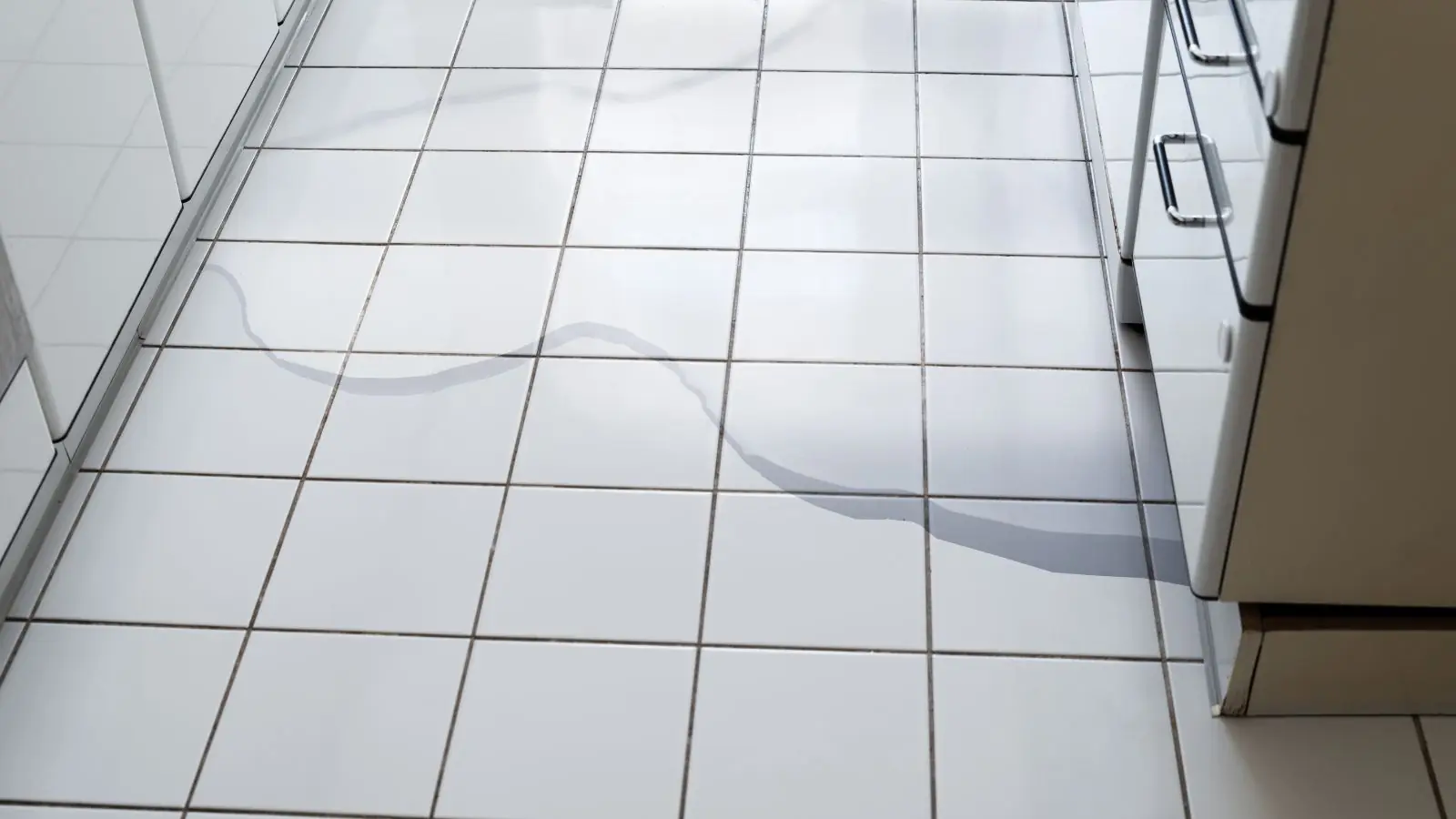
A kitchen holds more water sources in one room than any other space in a home. The sink has two supply lines and a drain, the dishwasher sits in its own alcove, and the refrigerator may have a water line. Add cabinets, a countertop seam and a floor laid over a subfloor, and a small leak has plenty of places to hide.
This page covers the kitchen as a room, from the sink base to the ceiling below an upstairs kitchen. If you can see water moving, shut off the supply and call the 24/7 line.
How Kitchen Water Damage Starts in College Park Homes
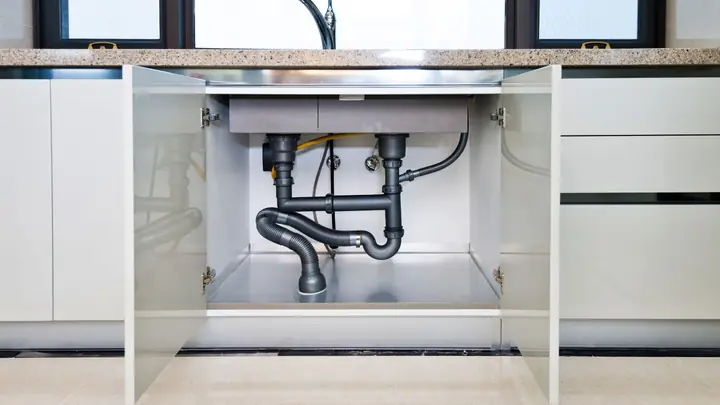
Most kitchen leaks begin under the sink. Supply lines age at the fittings, a slip nut on the drain loosens, or a disposal flange seeps. The water runs down the back of the cabinet and into the toe kick before anyone sees it. Because closed doors hide the leak, it can go on for weeks.
The second common start is the countertop edge. Water that gets past a sink rim or a backsplash seam soaks the cabinet top and the particleboard below it. Dishwasher alcoves and refrigerator lines add a third path into the floor.
Households, plumbers and permits in College Park
The U.S. Census Bureau's American Community Survey for 2020 to 2024 counts 9,007 households in College Park, with 2.69 people per household on average. Kitchens here get steady daily use, and fittings under the sink wear with it.
WSSC Water says most plumbing projects in its service area must be done by a WSSC Water-licensed plumber or gasfitter. Prince George's County says WSSC issues plumbing permits and handles plumbing inspections, and that its own permitting office does not. The County also says permits are generally not needed to replace an existing fixture.
What a Kitchen Leak Looks Like Before It Is Obvious
Look low and look closely. Kitchen leaks usually show first at the floor line, the cabinet base or the ceiling beneath, and each sign points to a different layer.
| Sign | Likely cause | What it can mean |
|---|---|---|
| Swollen or crumbling cabinet base | A long drip under the sink | Particleboard has soaked and rarely recovers |
| Cupped or lifting floor near the sink | Water under the flooring | The subfloor may be wet past the visible edge |
| Loose tile or dark grout lines | Moisture below the tile | The mortar bed or subfloor is holding water |
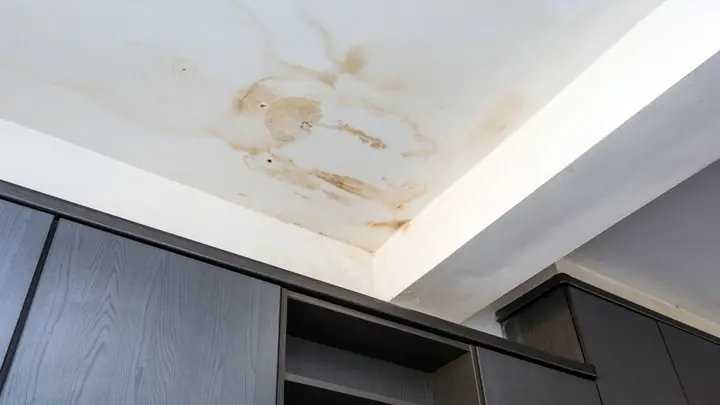
| Stain on the ceiling under an upstairs kitchen | A leak in the floor above | Insulation and drywall are wet |
| Musty smell inside the sink cabinet | Moisture trapped by closed doors | A slow leak that is still running |
| Warped countertop edge at the sink | Water getting under the rim | The cabinet top below is wet |
Readings taken on site, not appearance, decide what is actually wet.
Kitchen Safety First: Water, Power and Gas
- Close the small angle stops under the sink, one on each supply line, by turning them clockwise. If they do not hold, close the main water shut-off for the home.
- Mind the electricity. Disposals, dishwashers and countertop outlets share this room with water. Turn off the circuit at the panel only if you can reach it standing on a dry floor, and otherwise call 911 or the electric utility.
- If you smell gas, leave the home and call the gas utility or 911 from outside. Do not flip switches on the way out.
- Keep out from under a ceiling that sags below an upstairs kitchen.
- Photograph the cabinet base, the floor and any stains before you wipe anything.
- Move food and small items out of wet lower cabinets, and prop the doors open.
Water under the sink or through the ceiling? Call the 24/7 line and we will talk you through the shut-off.
☎ Call (301) 936-0619What Dries in Place and What Comes Out
Kitchen drying is a sorting job. Solid wood cabinets, tile and sealed stone often dry in place. Particleboard, damp insulation and soft drywall often do not. The technician reads moisture in every layer and marks what stays.
| Material | Often dried in place | Often removed |
|---|---|---|
| Cabinet bases | Solid wood or plywood that dried fast | Swollen particleboard and laminate-faced bases |
| Toe kicks | Taken off, dried and reinstalled | Swollen or musty kick boards |
| Vinyl and laminate flooring | Rarely, since water runs under the seams | Cut and lifted in the wet zone |
| Tile | Often, with drying from below and through the grout | Loose tile over a wet mortar bed |
| Subfloor | Plywood that reads dry after drying | Soft or delaminating panels |
| Drywall below the counter | Firm and intact after drying | Soft, stained or crumbling sections |
On-site readings decide each item.
Equipment follows the sort. After surface water is extracted, air movers and LGR dehumidifiers run while a thermal camera and moisture meter track the wet layers. Toe kicks come off so air reaches the cabinet base, and small holes behind the base let dry air into the wall cavity. Drying mats pull moisture out of the subfloor, and HEPA air scrubbers run when anything is cut out.
ANSI/IICRC S500 is the industry reference for this work, and it is why drying continues until readings return to normal rather than until a floor feels dry. Once the kitchen is dry, the rebuild is covered under water damage repair, which replaces drywall, flooring and finishes.
Upstairs Kitchens and the Ceiling Below
In a two-story home or a stacked apartment, a kitchen leak often appears as a stain on the ceiling below. Water follows joists and wiring holes, so the stain can sit several feet from the source. Do not poke it.
We dry the joist bay from below through small openings and check the kitchen floor above at the same visit. The drying method matches the one on our water mitigation page, applied to a cavity instead of an open room.
What Changes the Cost of a Kitchen Water Job
- How long the leak ran before it was found.
- How much cabinet run and flooring got wet.
- The layers involved, since tile, vinyl and laminate dry at different rates.
- Whether a ceiling below is wet too.
- How many days of drying equipment the readings call for.
- How much rebuild follows, including cabinets, flooring and finish matching.
Scope and price are explained before work starts. We do not publish dollar figures, because they depend on what the readings show.
Kitchen Leaks and Your Insurance
A sudden supply failure is often treated differently from a drip that went on for months. Sudden and accidental damage is often covered, and long-term seepage often is not. Policies commonly pay for the resulting damage rather than the failed part. Check your policy and ask your insurer, who decides coverage.
If you rent, tell the landlord in writing first, because cabinets and flooring in a rental usually belong to the owner. Your belongings may fall under your own renters policy. We also dry kitchens in Beltsville and Hyattsville.
Kitchen Leak Mistakes and Prevention
- Do not paint or caulk over a stain. The water source and the wet layers are still there.
- Do not close the cabinet doors on a wet sink base. Airflow is the first step in drying it.
- Do not use a heat gun or space heater on wet cabinets. Fast heat can warp them.
- Check the supply lines under the sink monthly with a dry paper towel, and replace lines with rust or bulges.
- Do not put stored items back before the base reads dry.
Not sure how far a kitchen leak has traveled? Describe it on the phone and we will say what to check.
☎ Call (301) 936-0619Kitchen Water Damage Questions
Yes. The 24/7 line is open every hour, and we offer same-day response when available. We do not promise an arrival time, and we will tell you how to stop the water while a crew is arranged.
Solid wood and plywood bases often dry in place. Particleboard that has swollen usually has to be replaced. A moisture reading and a look at the base decide it.
Often. Water travels under the finished floor. We check the subfloor with a moisture meter and open small sections where the readings call for it.
If a supply line, drain or valve failed, someone has to fix it. WSSC Water says most plumbing projects in its service area must be done by a WSSC Water-licensed plumber. We dry and restore the kitchen once the source is shut off or fixed.
Your plumber, in most cases. In Prince George's County the permit comes from WSSC and so does the inspection. Ask the plumber when the walls can be closed so drying is finished first.