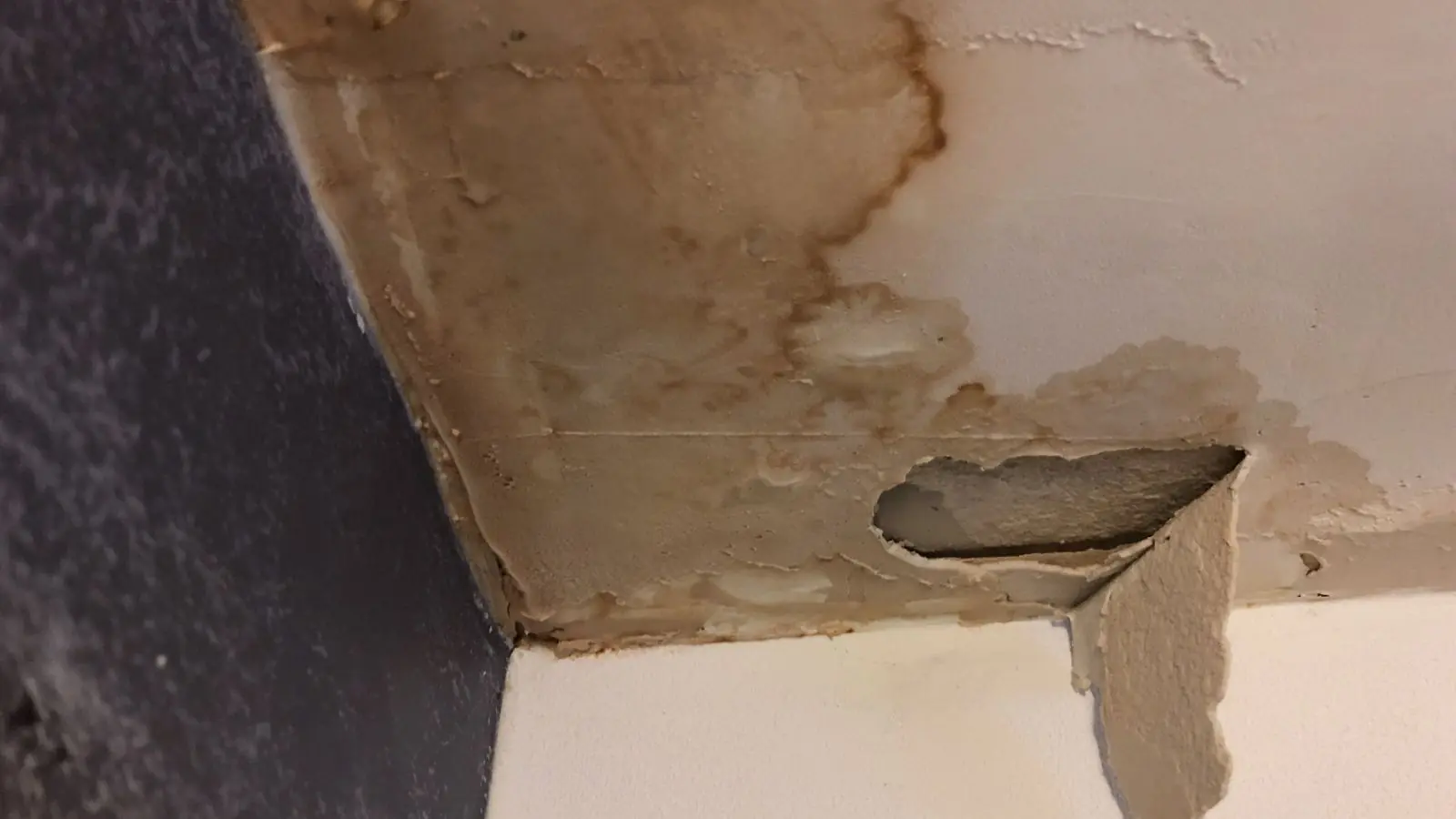
A roof leak is slow to show and quick to spread. Rain gets under a damaged shingle or past a flashing, runs along the decking, soaks the attic insulation and only then darkens a ceiling. By the time you see a brown ring, the water has usually been working for hours or days. This page covers what happens inside the building once that water arrives.
How Roof Leaks Turn Into Water Damage in College Park
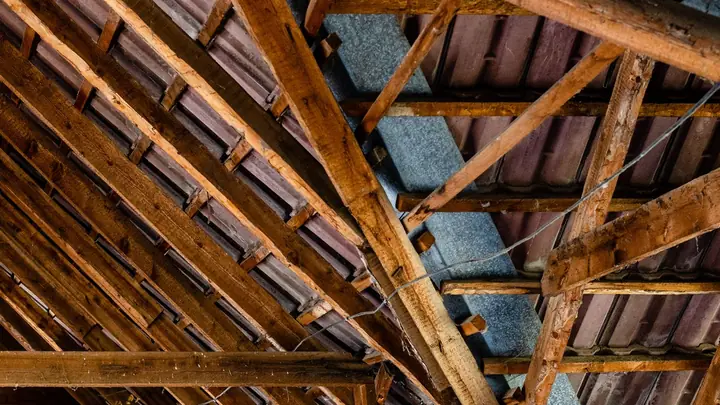
Wind-driven rain is the usual trigger. When a storm pushes rain sideways, it finds the weak points that a gentle rain misses, such as the edge of a chimney, a plumbing vent boot, a skylight curb or a valley where two roof slopes meet. Older homes often have several of these spots, and each one is a separate path for water.
Inside, the water follows gravity and then spreads. It soaks the insulation first, which holds water like a sponge and keeps it against the drywall. A ceiling cavity can hold a surprising amount before the paint shows anything. When the drywall finally sags, the wet area behind it is often much larger than the stain.
What the Weather Record Says
According to NOAA climate normals from the National Weather Service for the Washington area, the region averages about 41.82 inches of precipitation a year. June and July are the wettest months, which is also when summer thunderstorms drop heavy rain in short bursts on an aging roof.
The U.S. Census Bureau's 2020 count lists 11,539 housing units in College Park, and 6,652 of the 9,606 occupied units are rented. If you rent, the City of College Park says tenants can report an alleged housing code violation directly to the City, and the City inspects after a complaint. Tell your landlord about the leak in writing first and keep your photos.
Signs of a Roof Leak Inside the House
Some signs are obvious and some are easy to miss. Use this table to match what you see with what it usually means.
| What you see | What it usually means | What it needs |
|---|---|---|
| Brown ring on the ceiling that grows after rain | Active leak above, wet insulation and drywall | Roofer for the source, drying for the ceiling |
| Bubbling or peeling paint near a ceiling corner | Water moving along the framing to the wall | Moisture mapping before any repainting |
| Drip into a light fixture or ceiling fan | Water reached the wiring path | Power off at the breaker, then professional drying |
| Sagging or soft ceiling drywall | Drywall is holding a lot of water | Careful removal, and containment of the debris |
| Musty smell in an upstairs closet or hallway | Hidden wet insulation or framing | Thermal imaging and meter readings |
| Damp attic insulation with dark staining | Repeated leaks over time | Insulation removal and drying of the decking |
General guidance only. Meter readings on site decide what is actually wet.
A stain that has no ring and no growth may be old. Dry stains still deserve a meter check, because a ceiling can look dry while the framing above it stays damp.
First Hour Safety Steps for a Roof Leak
Safety comes before cleanup
Water near light fixtures and outlets is a shock risk. If water is dripping from a fixture or the ceiling around it is wet, turn off the breaker for that room if you can reach the panel without standing in water. If you cannot, stay out of the room and call the electric utility or 911.
A bulging ceiling can fall without warning. Keep people and pets out from under it. Do not poke it from below, because the water behind it will come down all at once.
- Place buckets or tubs under active drips and move furniture and rugs aside.
- Photograph the ceiling, the walls and any water on the floor with the date visible.
- Do not climb onto a wet roof. Temporary tarping is a roofer's job, and a fall is a worse problem than a leak.
- Call a roofer for the source and call us for the water inside.
Water coming through the ceiling right now? Call the 24/7 line and we will tell you what to do first.
☎ Call (301) 936-0619How We Dry and Rebuild After a Roof Leak
We start with moisture meters and a thermal camera to find where the water went, since a ceiling stain is only the visible edge. Wet attic insulation is removed and bagged, because it stays wet for a long time and keeps feeding the framing. Soaked drywall is cut out past the wet line in neat sections.
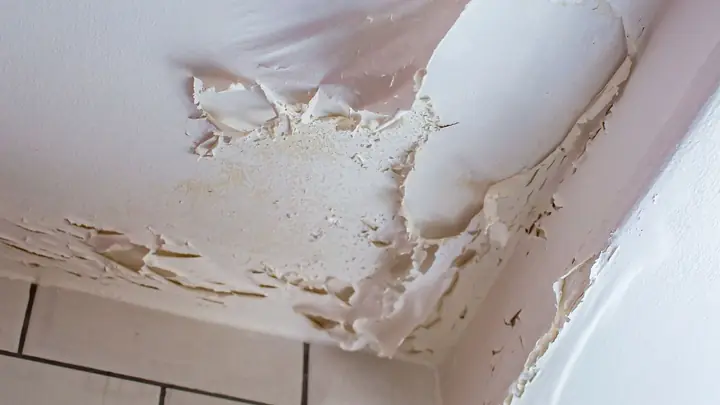
Air movers and LGR dehumidifiers then go to work on the remaining materials, and we take daily readings until the framing and decking read dry. HEPA air scrubbers run while we cut and remove material, to keep dust out of the rest of the home. Afterward we replace insulation and drywall and finish the ceiling to match.
We follow the ANSI/IICRC S500 water damage standard as an industry reference for drying goals. We do not repair roofs. If the roofer is still working, we plan around their schedule, so wet materials are not covered back up before they are dry. For the ceiling and wall rebuild, see our water damage repair page.
What Changes the Cost of a Roof Leak Cleanup
Cost follows the amount of wet material and the time it takes to dry it, so the same ceiling stain can lead to very different jobs. These are the factors that move it.
- How much attic insulation is wet and has to be removed.
- The size of the ceiling area that must be cut out, and whether it is plaster or drywall.
- How many days of air movers and dehumidifiers the framing needs to reach dry readings.
- Whether light fixtures, wiring or a ceiling fan are involved.
- The finish work, such as texture, paint and trim, needed to match the room.
We explain scope and price before work starts. We do not quote numbers without seeing the site, because the wet area behind a ceiling is rarely what it looks like from below. For the drying stage on its own, see water mitigation.
Insurance and Roof Leaks
Insurers often separate sudden damage from long-term wear. A storm that tears off shingles and lets rain in is treated differently from a roof that slowly deteriorated and leaked for months. The roof repair itself and the interior damage may fall under different parts of the policy. Check your policy and ask your insurer before signing anything.
Photos taken before cleanup, the date of the storm and the roofer's written findings all help. Keep any wet materials you remove until the insurer says you can dispose of them, or photograph them well first.
Mistakes to Avoid and Prevention
- Painting over a stain. The paint hides it, and the wet drywall underneath grows worse.
- Waiting for the next dry day to call. Wet insulation does not dry on its own.
- Climbing onto the roof in the rain to look for the hole.
- Closing up the attic or ceiling again before readings are dry.
- Ignoring small stains. A faint ring after every hard rain points to a slow leak.
For prevention, look at the roof from the ground after big storms, clear gutters so water does not back up under the edge shingles, and check the attic with a flashlight in the spring. Fresh daylight or a damp patch on the underside of the decking is a reason to call a roofer. For neighbors outside the city, we also serve Hyattsville and Beltsville.
Found a stain after the storm? Call and describe it, and we will say whether it needs drying.
☎ Call (301) 936-0619Roofer already booked? Call us so the drying and the roof repair are timed together.
☎ Call (301) 936-0619Roof Leak Water Damage Questions
Yes. Our line is staffed around the clock, including nights and holidays. We offer same-day response when available and do not promise a fixed arrival time. Call (301) 936-0619 and tell us where the water is showing.
No. We dry the structure and rebuild the interior finish. A roofer repairs the roof, and temporary tarping is also a roofer's job. We work with whoever you hire.
It depends on how much insulation and drywall got wet and how humid the weather is. Readings decide the end date, not a calendar. A small ceiling section can finish in a few days, while a wet attic takes longer.
A stain can sit over wet material. A meter reading tells you whether the area is dry. Painting before that check can trap moisture.
The City says tenants can report an alleged housing code violation to it, and the City inspects after a direct complaint. Write to your landlord first and keep copies of your photos and messages.