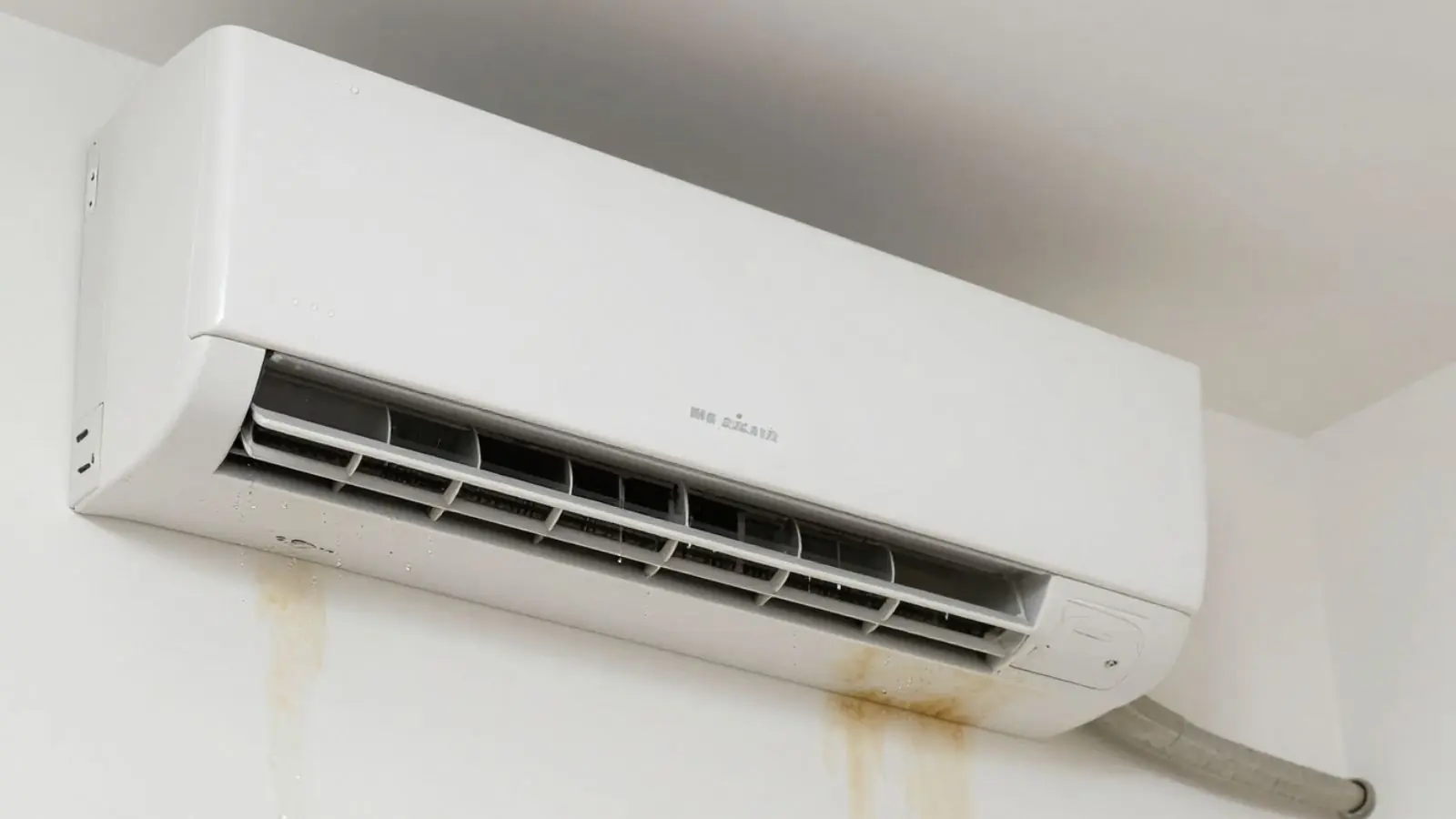
An air conditioner makes water every hour it runs. The coil in the air handler is cold, and moisture from the indoor air condenses on it and drips into a pan. A drain line carries that water out of the house. When the line clogs, the pan fills and spills, and the spill soaks whatever is underneath. That is the usual AC leak, and it is a slow one.
How an AC Leak Becomes Water Damage in College Park
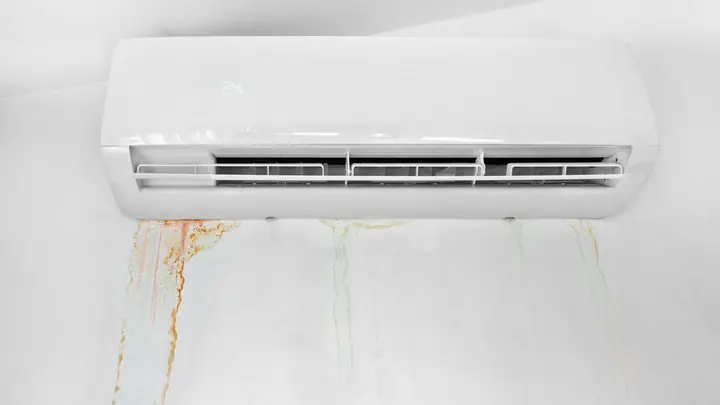
Air handlers often sit where nobody looks, in an attic, a hall closet or a utility room above living space. A drain clog can build for weeks. Algae and dust form a plug, the pan overflows and the water seeps into the floor, the insulation and the ceiling below. The first sign is often a stain on a ceiling in a room with no pipes above it.
Humid summers make it worse. The more humid the air, the more water the coil pulls out, and the sooner a partial clog turns into an overflow. Mold risk grows when the area stays damp, so the right response is to dry the space quickly and fix the drain.
What We Can Verify About Local Homes and Summers
NOAA climate normals from the National Weather Service for the Washington area show June and July as the wettest months of the year. Those same warm, damp weeks are when air conditioners run longest and condensate lines work hardest.
The U.S. Census Bureau's QuickFacts for College Park reports an owner-occupied housing rate of 38.2 percent for 2019 through 2023, so most households here rent. The City of College Park says any property housing people other than the owner's immediate family needs a Residential Occupancy Permit and goes through annual inspections for life safety codes. A tenant who finds a leaking unit should tell the landlord in writing.
Signs of an AC Leak Versus Other Leaks
An AC leak has a pattern. It follows the cooling season and often gets worse during long hot days. Compare what you see below.
| What you see | Likely AC cause | Next step |
|---|---|---|
| Ceiling stain that grows on hot days | Overflow from an attic air handler or pan | Turn off the AC and call an HVAC technician |
| Water at the base of a closet unit | Clogged drain or cracked pan | Shut the system off, then dry the floor |
| Drip from an air vent or register | Water in the duct from a leaking coil or poor insulation | Technician check, then ceiling inspection |
| Musty smell near the air handler | Damp insulation or a wet floor under the unit | Moisture readings and removal of wet material |
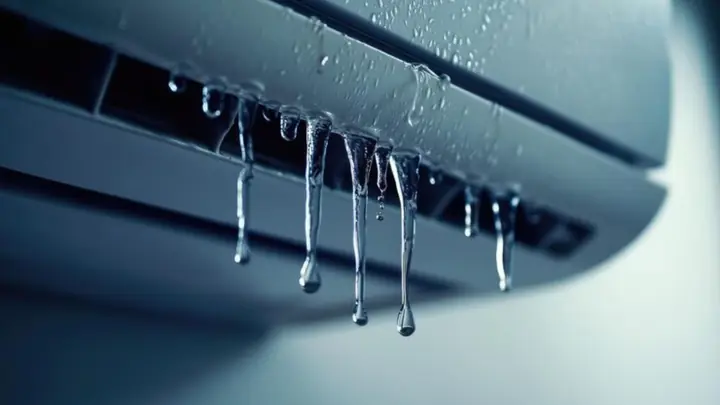
| Ice on the indoor coil | Airflow problem, then melting water | Switch to fan only and call HVAC |
| Stain that appears with no rain and no plumbing above | Slow condensate seepage | Check the attic or closet above |
General guidance only. An HVAC technician confirms the cause, and meter readings show how far the water went.
First Hour Safety Steps for an AC Leak
Turn the unit off before anything else
Switch the thermostat to off and, if you can reach it dry, switch the air handler's breaker off. Water in a unit with live power is a shock risk. If the ceiling below the unit is dripping near a light or outlet, treat it as an electrical hazard and keep clear.
Do not stand on wet attic boards or a soft closet floor. Insulation hides weak spots, and a wet ceiling can give way.
- Place a bucket under any drip and move furniture and rugs out of the way.
- Take dated photos of the stain, the pan and the drain.
- Do not run the AC again until the drain is cleared, since it will refill the pan.
- Call an HVAC technician for the unit and call us for the wet building materials.
Stain under an air handler? Call the 24/7 line and describe where the unit sits.
☎ Call (301) 936-0619How We Dry Ceilings and Closets After an AC Leak
We find the wet area first, using moisture meters and a thermal camera, since condensate often travels along joists before it drops. Wet insulation, soaked drywall and swollen closet flooring are removed in measured sections. Hard surfaces are cleaned and the area is opened up so air can reach the framing.
Air movers and LGR dehumidifiers then run until the readings drop to dry. In attics, we set equipment where it does not overload the circuit and we keep the work area away from the HVAC return. Afterward we replace the insulation and drywall and finish the ceiling. We use ANSI/IICRC S500 as a reference for drying goals and do not claim it as a certification.
We do not repair or replace HVAC systems. Your technician clears the drain, tests the float switch and fixes the unit, and we handle the building. If the leak left damp, musty material behind, see our mold remediation page for what happens when growth is found.
What Changes the Cost of AC Leak Damage
- How long the leak ran before anyone noticed, which sets how deep the water went.
- Whether the attic insulation is wet and has to be replaced.
- How many ceiling and wall sections must be cut out and rebuilt.
- Drying days for air movers and dehumidifiers, which depend on the weather.
- Whether the closet or utility room floor is wood, laminate or tile.
We explain scope and price before work starts. We do not give numbers by phone, because a ceiling stain can sit on a small wet patch or a large one.
Insurance and AC Leaks
Policies often treat sudden overflow differently from a slow drip that went unnoticed for months. The cost to repair the AC unit itself is usually a separate matter from the water damage it caused. Check your policy and ask your insurer, and tell them the cause was a condensate line if that is what your technician finds.
Prevention and Mistakes to Avoid
- Ignoring a small stain in a ceiling, which points to a drain that is already clogged.
- Running the AC with water in the pan.
- Skipping a yearly check of the condensate line before the cooling season.
- Having no float switch or secondary pan under an attic air handler.
A technician can flush the line, install a float switch that shuts the unit off when the pan fills, and set up a secondary pan. Those steps cost far less than a rebuilt ceiling. For the repair work after the drying, see our water damage repair page, and we also serve Greenbelt and Hyattsville.
Not sure if the stain is from the AC? Call and we will help you sort out the likely source.
☎ Call (301) 936-0619Ready to dry the ceiling before the next hot week? Call us now.
☎ Call (301) 936-0619AC Leak Water Damage Questions
Yes. You can reach the line any hour, and we offer same-day response when available without promising an arrival time. Call (301) 936-0619. Turn the AC off first, then tell us where the water is.
No. We dry and rebuild the building. An HVAC technician repairs the unit, clears the drain and checks the pan and float switch.
Damp insulation and drywall that stay wet can grow mold, so we dry them quickly. If growth is found, the plan changes to mold remediation, which follows its own steps.
An air handler in the attic can overflow its pan, and the drain line may be clogged. The pan sits above the ceiling and feeds water down through the insulation.
The City of College Park says rental properties need a Residential Occupancy Permit and are inspected annually for life safety codes. A tenant who finds a leak should write to the landlord and keep photos.