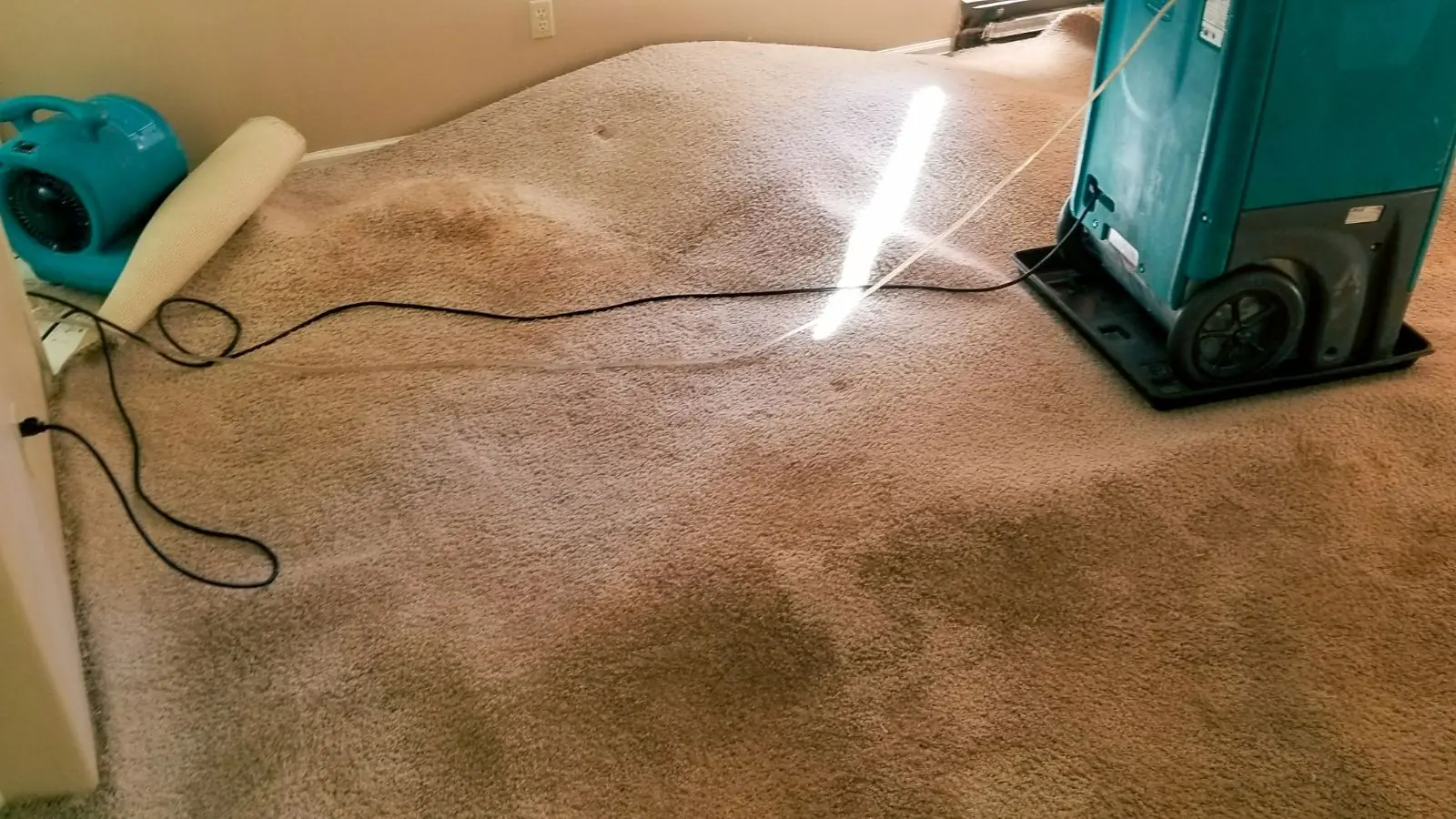
Wet carpet is easy to underestimate. The top looks as if it will dry on its own, but the pad underneath acts like a sponge and holds water against the subfloor. Whether carpet can be saved depends on three things: what kind of water it was, how long it sat, and what is under it.
This page covers carpet and pad in homes and apartments, from a spill of clean water to a basement with wall-to-wall carpet. If water is still flowing, call the 24/7 line first.
How Carpet Gets Wet in College Park Homes
Carpet is a common floor in rental apartments, bedrooms and finished basements. Water reaches it from a failed supply line, an overflowing tub or toilet, an upstairs unit, a leaking window well or a basement floor drain that backs up.
The source matters more than the amount, because it decides whether the carpet is a candidate for drying or for removal.
Turnover and drying guidance
The Census Bureau's QuickFacts for College Park, drawn from the 2020 to 2024 American Community Survey, show that 61.1 percent of residents aged one and over lived in the same house a year earlier. About four in ten had moved during the year. In a market with that much turnover, wet carpet is often found at move-in or move-out, when it can be hard to say how long it has been damp.
EPA's mold remediation guide for schools and commercial buildings, in its table on water damage, lists carpet and backing for water extraction, dehumidifier and fan drying within 24 to 48 hours. It also says the subfloor under the carpet must be cleaned and dried. The table covers clean water only. For sewage or other contaminated water, EPA says protective equipment and containment are required and fans should wait until the water is confirmed clean.
The City of College Park says its Department of Public Services inspects rental properties every year. If carpet in a rental got wet because of a building problem, tell the landlord in writing and keep your photos.
What Wet Carpet Is Telling You
| What you see or smell | What it means | Next step |
|---|---|---|
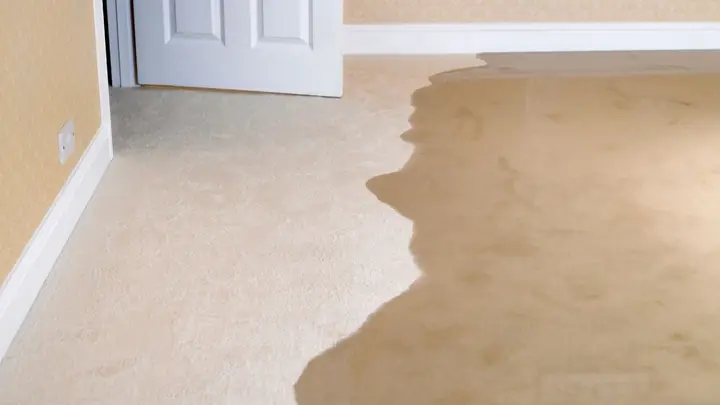
| A dark outline or tide line on the carpet | Water wicked up and dried at the edge | Check the pad and tack strip for moisture |
| Squish underfoot with a dry-looking top | The pad is saturated | The pad usually comes out and the carpet may be lifted |
| A musty smell a day or two later | Moisture is trapped in the pad or subfloor | Dry or remove it. Deodorizer does not fix it |
| Rust or bubbling at tack strips | Metal strips and subfloor have been wet | Lift an edge and test the subfloor |
| Rippling or loose carpet | Backing and adhesive are loosening | Needs re-stretching after drying |
Moisture readings on site confirm each of these.
Safety First: Water Type, Power and Who to Call
- Stop the source. Close the fixture valve, or the main water shut-off for the home.
- Stay off wet carpet near outlets, power strips and lamps. Turn off the circuit at the panel only if you can reach it standing dry, and otherwise call 911 or the electric utility.
- If the water came from a toilet, sewer line or floor drain, or flooded in from outside, keep people and pets away from it. Do not use a household vacuum.
- Photograph and film the room before you move anything. Lift furniture legs onto foil or blocks only if you can do it without standing in water.
- Limit walking on wet carpet. Foot traffic pushes water and dirt into the pad.
Carpet soaked and you are not sure where the water came from? Call now and we will help you sort it out.
☎ Call (301) 936-0619Clean, Gray and Contaminated Water: Save or Replace
| Water type | Typical source | What usually happens to carpet |
|---|---|---|
| Clean | A supply line, sink overflow or rain through a roof | Often dried in place if caught early. The pad is often replaced |
| Gray | Washing machine or dishwasher discharge, or an overflowing tub | Carpet may be cleaned if treated fast. The pad is usually replaced |
| Contaminated | Sewage, floodwater or groundwater | Carpet and pad are usually removed and discarded |
As a general guide. Water can slip into a worse category the longer it sits.
Time matters in every row. The longer carpet stays wet, the harder it is to save. If it has been wet for more than a day or two, or has a smell, we expect removal, and we say so plainly rather than promise a save we cannot deliver.
Drying Carpet in Place, Lifting It or Replacing It
For clean water caught early we often dry carpet in place. A wet-extraction wand pulls water out of the carpet, and the pad is lifted or opened so it can be dried or removed. We release the carpet along one edge from the tack strip and float it on air from air movers, while LGR dehumidifiers keep the room dry. A moisture meter checks the carpet, the pad and the subfloor.
ANSI/IICRC S500 is the industry reference for this method. Carpet that has been lifted has to be re-stretched and re-attached once the subfloor is dry, and that belongs to the rebuild stage. Carpet that cannot be saved comes out with its pad, and the tack strips are checked and replaced if they are wet or rusted.
Stairs, Apartments and Finished Basements
Stairs are hard because carpet wraps each tread and riser and the pad is thin. Water runs down the nosing and soaks the stair below, so we check from underneath where we can and lift sections instead of the whole run.
In an apartment the carpet may run through several rooms over a shared floor, so the wet area can reach past your door. In a finished basement, wall-to-wall carpet sits on a slab that stays damp, and a flooded basement follows the cleanup path described under flood damage restoration.
If a musty smell remains after drying, mold remediation is the next step, because it means moisture is still in the pad or subfloor.
What Changes the Cost of Carpet Water Damage
- The water type, since contaminated water means removal and added cleanup.
- How many hours or days the carpet stayed wet.
- The square footage and the number of rooms.
- Whether the carpet is stretched over tack strips or glued down.
- Stairs, which take more labor per square foot than an open room.
- How many days of drying equipment the readings call for.
- The rebuild: new pad, re-stretching or new carpet.
Scope and price are explained before work starts. We do not publish dollar figures, because a number without readings is a guess.
Carpet Water Damage and Insurance
Insurers often separate sudden water from gradual leaks, and a flood from a plumbing failure. Sudden and accidental damage is often covered, while long-term seepage and flooding from outside often are not, and flood usually needs its own policy. Check your policy and ask your insurer, who decides coverage.
Carpet may be a building item or a tenant item depending on the lease and the policy. Photos of the carpet before it is moved and a record of moisture readings both help. We serve Greenbelt and Beltsville as well, with the same documentation.
Carpet Mistakes to Avoid
- Do not use a hair dryer or space heater to dry wet carpet. It dries the top and leaves the pad wet.
- Do not rely on a household vacuum. It is not made for standing water.
- Do not set furniture back on damp carpet. Stains from wood and metal feet are hard to remove.
- Do not spray fragrance or deodorizer over a damp smell. The moisture stays.
- Do not wait for the carpet to dry on its own. Pad holds water for a long time.
Want a straight answer on whether your carpet can be saved? Call and describe the water and how long it sat.
☎ Call (301) 936-0619Wet Carpet Questions
Yes. The 24/7 line is open every hour, and we offer same-day response when available. We do not promise an arrival time, and we will tell you what to do with the water and the carpet while a crew is arranged.
Often, if the water was clean and extraction and airflow started quickly. Carpet that sat in gray or contaminated water, or stayed wet for days, is usually replaced. Readings and the water source decide it.
Usually when it was soaked. Pad is thin foam or fiber that traps water against the subfloor, and replacing it is part of the rebuild.
A few days is common for carpet that is dried in place, and the moisture readings decide when it is done. Carpet that is removed leaves the subfloor to dry on its own schedule.
Photograph it, tell your landlord or property manager in writing, and call us to start drying. Keep a copy of your notice, and ask your insurer about your belongings.