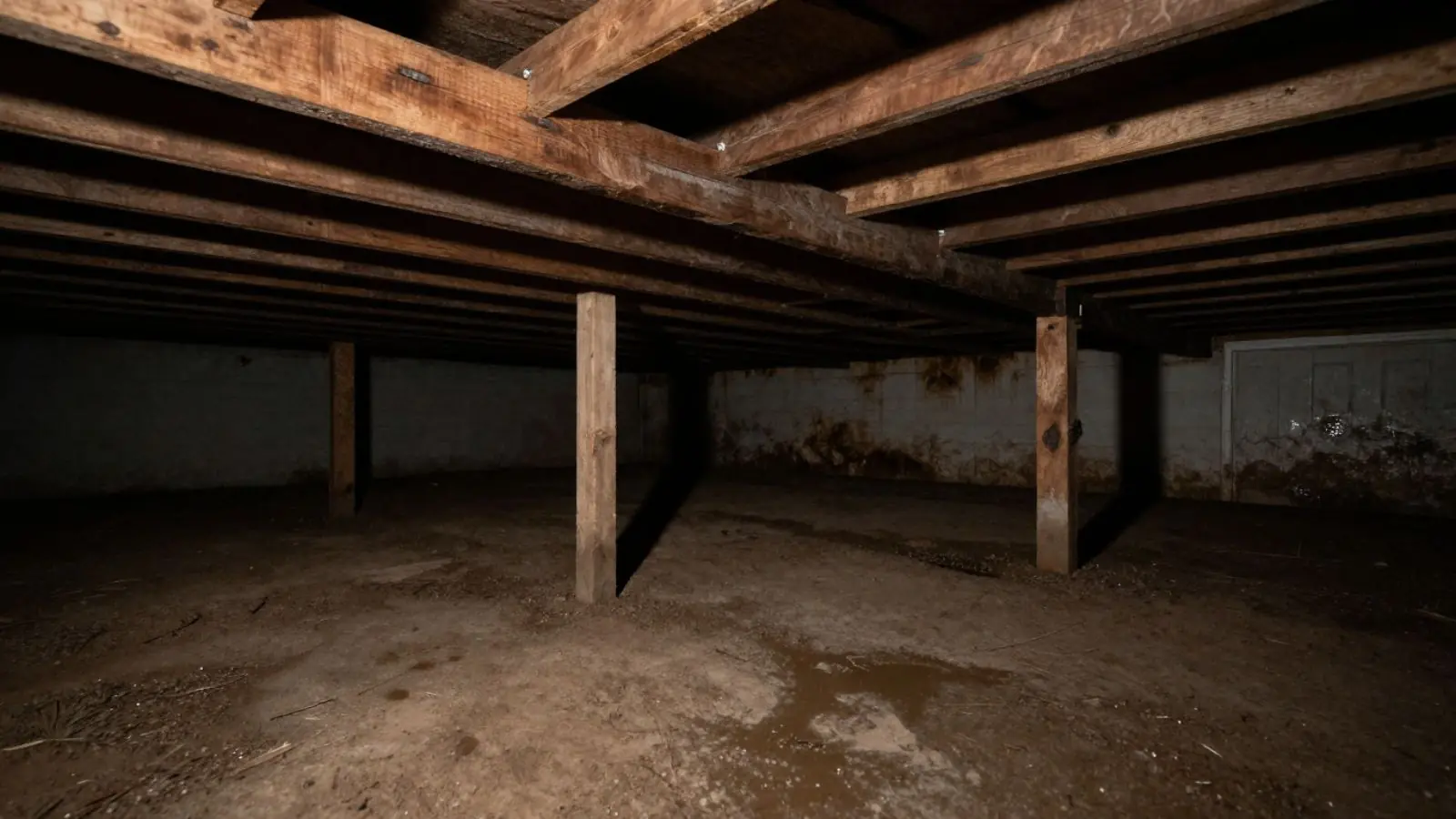
A crawl space is the shallow gap between the soil and the floor framing of a house. When water gets in, you rarely see it first. You notice a musty smell in the rooms above, a floor that feels cold or soft, or a plumber who climbs out of the hatch with wet knees. If you can see standing water through the hatch, call the 24/7 line now.
How Water Gets Under College Park Houses
The Maryland Historical Trust listing for the Old Town College Park Historic District, added to the register in 2012, says most residential building there happened from the 1920s until the end of World War II.
The listing does not describe foundations, so we do not claim every house on those streets has a crawl space. What the age tells us is that the framing is old, the pipes under the floor may be older than the walls above, and the grade around the house has had decades to settle.
We cannot give a local count of College Park houses with crawl spaces. We found no published figure for the city, and Census housing tables do not separate foundation types. If the water is in a full basement instead, the basement page is the better fit.
Prince George's County's Residential Drainage Manual says crawl spaces can collect water beneath the home if the grade is not directed away from them, and it advises checking them periodically for standing water. That matches the jobs crews see.
Typical causes are soil that slopes toward the wall, a downspout that empties beside the foundation, a vent or door set below the soil line, and a supply or drain line that leaks over a dirt floor.
Signs of Water Under the Floor and What They Mean
| What you notice | What it usually means | What to do |
|---|---|---|
| Musty smell in rooms above | Damp soil or wet insulation under the floor | Look through the hatch with a light, and stay out if water is present |
| Floors that bounce, cup or feel soft | Subfloor or joists holding moisture | Call for moisture readings before anyone pulls boards |
| Insulation sagging or lying on the ground | Batts soaked and too heavy to stay in place | Photograph it before anything is removed |
| Beads of water on ducts or pipes | Humid air or a slow leak overhead | Note where it drips and tell us when you call |
| White crust on piers or wall | Water has passed through the masonry before | Mention it during the first call |
A table of signs is a starting point. Moisture meters decide what is actually wet.
Wet insulation is the sign people miss. Fiberglass batts soak up water, grow heavy and drop away from the joists. Once they sag against the wood, they hold water on the framing from below, and the subfloor stays damp long after the source is fixed.
First-Hour Safety Steps for Crawl Space Water
Stay out of the crawl space while it is wet
Do not climb into a space with standing water. Wiring, a furnace line or a water heater feed may run through it, and a tight space gives you no quick way out. Look through the hatch with a flashlight and take photos and video from the opening.
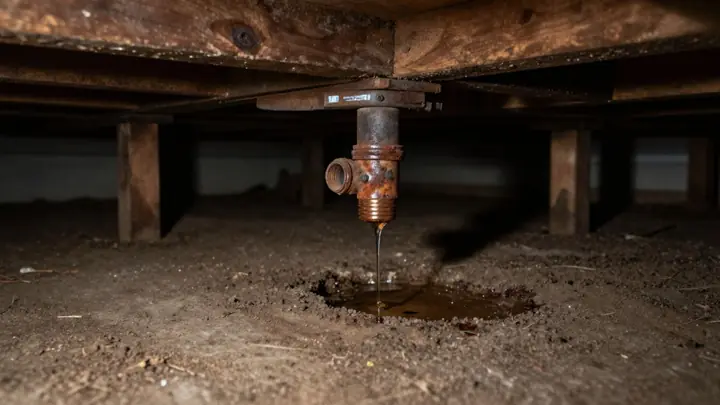
If a pipe is the source, close the main water valve where the line enters the house. If the water came from a drain or sewer, keep people and pets away and call the water and sewer utility. For a gas smell, sparking or a wet electrical panel, leave and call 911.
Water under your floor? Call now and we will talk you through the first safe steps.
☎ Call (301) 936-0619How We Pump, Contain and Dry a Crawl Space
Pumping starts at the lowest point. A small submersible pump sits in the water with a hose run out of the space and away from the foundation, so the water does not drain back in. Where the clearance is too low for a person to work upright, crews use low-profile pumps, extraction wands on extension poles and plastic sheeting to work on, so nobody lies in the mud.
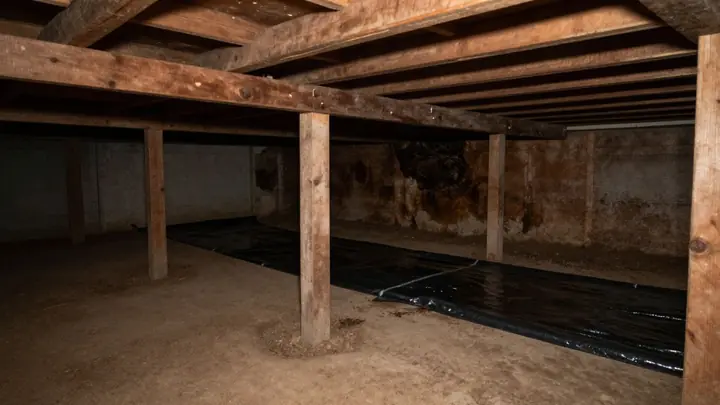
Before drying starts, we hang plastic sheeting to close the crawl space off from the living area and seal the hatch and floor openings where we can. Without that, fans pull damp, dusty air through gaps in the floor and into the rooms. Containment keeps it in one place until it can be treated.
- Submersible pumps and extraction wands for standing water.
- Moisture meters on joists, subfloor and sill plates.
- A thermal camera for soaked insulation and cold spots on the floor above.
- Air movers and LGR dehumidifiers set to a drying plan.
- HEPA air scrubbers when the space is opened to the rooms.
Soaked fiberglass or foam board is usually removed, because it holds water against the framing. Joists and subfloor are dried in place when readings allow. A torn or soaked vapor barrier is lifted, the soil underneath is dried, and the sheet is relaid or replaced as part of repair.
The drying plan follows the ANSI/IICRC S500 guide for professional water damage restoration, used here only as an industry reference, and daily readings show when the framing is dry enough for the equipment to leave.
What Changes the Cost of a Crawl Space Job
Access matters first. A wide hatch and three feet of clearance let a crew work quickly. A tight hatch and a low floor slow every step. After that come the depth and volume of water, whether it is clean or contaminated, how much insulation has to come out, whether the vapor barrier needs replacement, and how many days of drying equipment the framing needs.
You get the scope and the price before anyone starts pumping. If the cause is outside the crawl space, such as a grade problem or a failed gutter, fixing it is separate work from the cleanup and drying. Ask what each estimate includes so you can compare them fairly.
Insurance Questions for Water Under a House
The Maryland Insurance Administration calls problems from seepage maintenance issues that are generally not covered. A pipe that bursts over a crawl space is a different event from groundwater slowly rising through the soil, and which one happened often decides how a claim is read. Tell your insurer what you saw and when, and ask what your own policy says before agreeing to a repair plan.
Photos from the hatch, dates, a note of which pipe or line was involved and every receipt all help. Do not throw out soaked insulation or boards before they are photographed.
Mistakes That Make Crawl Space Water Worse
- Crawling in to look around, which stirs up mud and puts you near wiring.
- Aiming a household fan through the hatch, which pushes damp air into the house.
- Closing the vents and the hatch and hoping it dries on its own.
- Fixing the pipe but leaving the wet insulation hanging against the joists.
- Laying new insulation or a new vapor barrier over framing that is still wet.
Prevention is dull and it works. Extend downspouts away from the wall, keep the soil sloping away from the house, and look through the hatch after heavy rain. Dry crawl spaces stay dry because the water has somewhere else to go.
Not sure whether the space under your floor is wet? Call and describe what you see.
☎ Call (301) 936-0619Beyond College Park
We take crawl space calls in Hyattsville and Greenbelt as well. Access, framing age and ground conditions differ from street to street, and a crew looks at each space before it settles on a drying plan. For standing water that covers a whole level of the house, see flood damage restoration.
Crawl Space Water Questions
Yes, the phone line at (301) 936-0619 answers around the clock. We offer same-day response when a crew is available, and we will not name an arrival time on the call. Describe what you can see from the hatch.
Only if the space is dry of electrical hazards and you can pump without entering it. Most people cannot. Pumping from the hatch leaves wet insulation and soil behind, which is where the damage keeps going. A crew pumps, contains and dries in one plan.
Soaked insulation usually does, because it holds water against the joists and subfloor. Dry insulation above the wet area can often stay. Moisture readings and a thermal camera show which is which.
Soft spots, cupped boards, a musty smell and readings from a moisture meter all point to it. Hardwood and subfloor often dry in place when the water is caught early, so call before anyone pulls up flooring.
Prince George's County's Residential Drainage Manual says crawl spaces can collect water if the grade is not directed away, and advises checking them periodically for standing water. It also covers basement drainage and sump pumps.