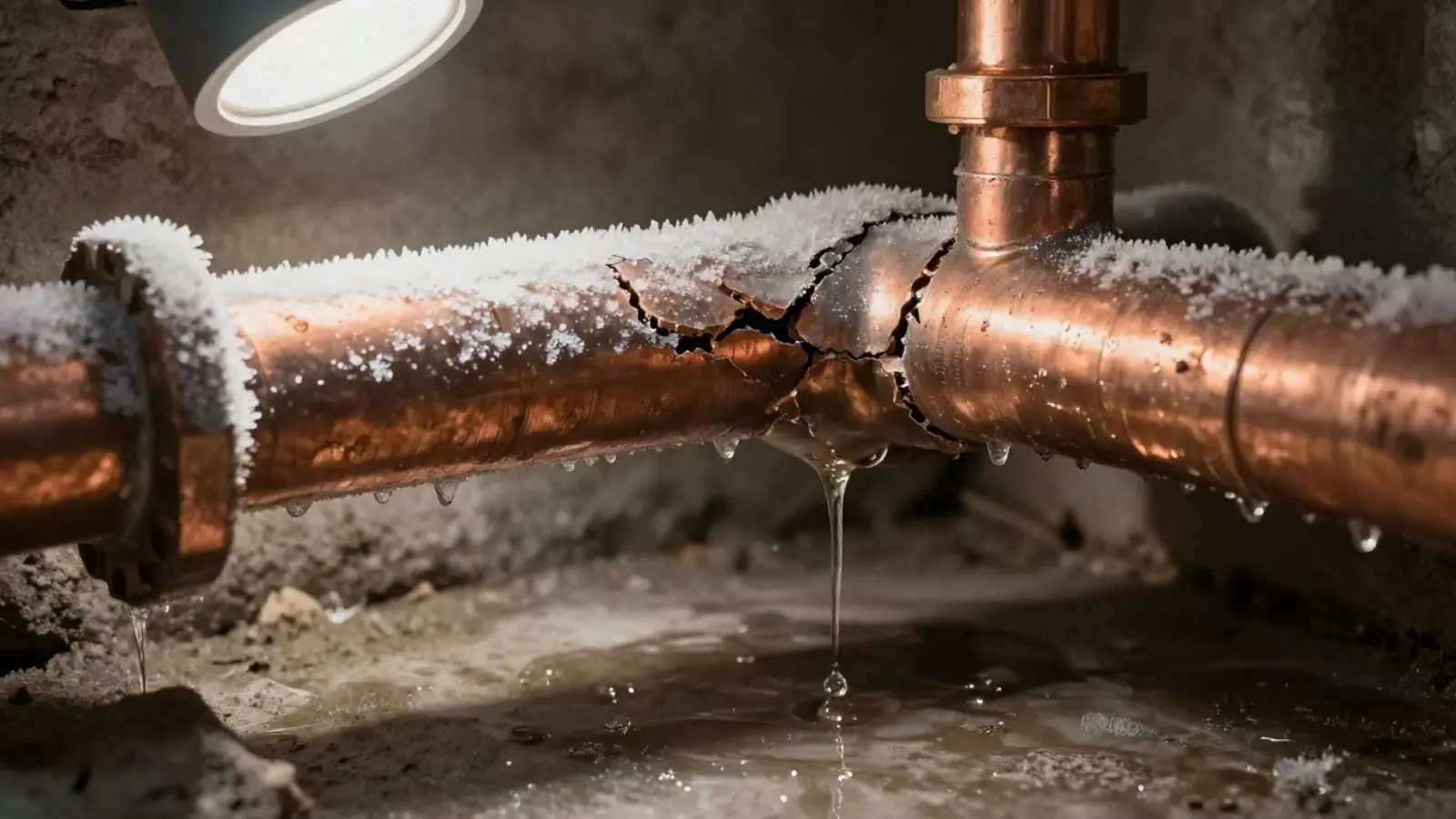
Frozen pipe damage is the water that appears after ice cracks a line and then melts. The crack forms in the cold. The flood begins when the temperature rises or when someone turns the heat up. If you have just found water on a floor after a hard freeze, close the main valve and call (301) 936-0619.
Why Pipes Freeze in a Mid-Atlantic Winter
College Park winters are not Arctic, which is part of the problem. Homes here are not built for sustained deep cold, so a hard night can catch pipes in uninsulated walls, crawlspaces and garages. The University of Maryland's atmospheric science department puts the average daily low in late January and early February at about 28 degrees Fahrenheit, with an average daily high near 45.
That means many days cross the freezing line overnight and warm up by afternoon. Ice forms, pressure builds between the ice and a closed faucet, and a pipe or joint splits. The same department reports that snow averages about 17 inches per winter. Wet snow and sleet melting into an eave can also reach a wall already weakened by cold.
Where Frozen Pipes Burst in Local Buildings
| Location | Why it freezes | What to check |
|---|---|---|
| Exterior walls | Pipes sit against cold masonry or siding with little insulation | Sink and bath lines on outside walls |
| Unheated basement corners | Cold air leaks in around rim joists and windows | Lines near the foundation and meter |
| Garage and porch supplies | Water lines pass through spaces without heat | Hose bibs and laundry connections |
| Attic and top-floor ceilings | Cold air reaches lines above insulation | Water stains on the ceiling below |
| Vacant units | Heat is lowered or off | Every wet wall in the unit |
Burst locations vary. A moisture reading finds the actual route the water took.
In older buildings, cold air finds its way around windows and rim joists. A pipe that survived forty winters can still freeze on the one night the heat failed. Rental units sit empty between leases, and a landlord checking on a vacant unit after a cold snap sometimes finds the damage already three floors deep.
Signs of a Frozen or Split Pipe
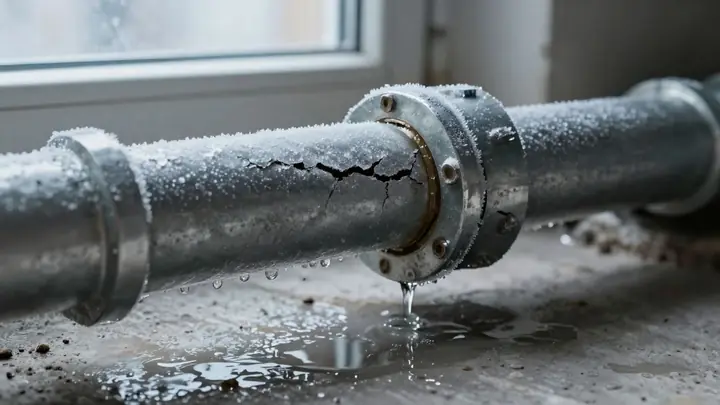
Before the break, you may see a faucet that runs only a trickle or not at all, frost on exposed pipe, or a pipe that bulges. After thaw, the signs change. You hear running water. A wall feels cold and wet. A ceiling stain spreads or drips. Treat any of these as urgent, because the hidden part of the damage is almost always larger than the visible part.
Found water after a freeze? Call the 24/7 line and describe where you see it.
☎ Call (301) 936-0619Safety Steps When a Pipe Freezes or Thaws
What to do before the water is gone
WSSC Water advises opening the cold faucet nearest a frozen pipe so pressure can escape. If you thaw a pipe with a hand-held hair dryer, WSSC Water warns that the pipe may split and spray, so know where the main valve is before you begin.
Never use an open flame. If water has reached outlets or the panel, stay out and call the electric utility or 911.
- Find and test the main valve before starting any thaw.
- Open the nearest cold tap to relieve pressure.
- Leave cabinet doors open on exterior walls so room warmth can reach the pipes.
- Keep the heat on. WSSC Water recommends no lower than 55 degrees when you are away.
- Take photographs of ice, cracks and wet areas before moving anything.
Pipe thawed and water spreading? Call now and we will plan extraction and drying.
☎ Call (301) 936-0619How We Dry After a Freeze Burst
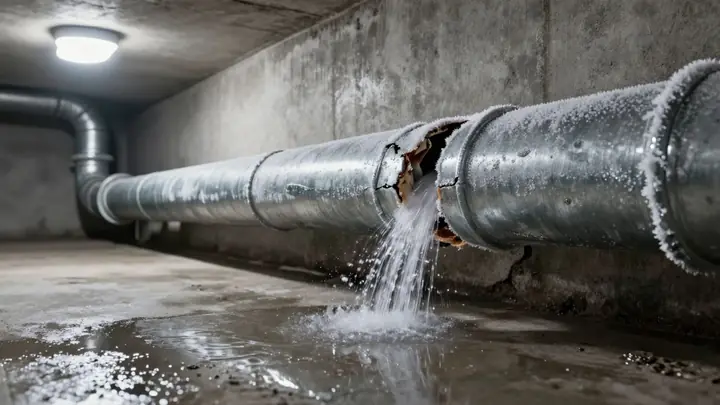
The work follows the water. Pumps and extractors take standing water off floors. A moisture meter and thermal camera then trace the route behind finishes, since cold water often runs a long way inside a wall before it shows. We open ceilings and walls only where readings call for it.
Air movers and low-grain-refrigerant dehumidifiers then dry the structure. In a cold building, drying is slower because cold air holds less moisture, so the heat has to be restored for the equipment to work well.
Technicians return to read the meters until the materials reach their dry standard. ANSI/IICRC S500 is the industry reference for that drying method. For a loss that spreads past the pipe zone, emergency water removal covers the extraction stage in detail.
What Affects the Cost of Freeze Damage
- How long the pipe leaked after it thawed.
- Whether the building was occupied or empty.
- How many levels the water traveled through.
- Whether insulation, drywall or flooring must come out.
- The days of drying that the readings call for.
Vacant buildings are often the most costly, because nobody was there to close the valve. We explain the scope and the price before work begins.
Insurance and Freeze Damage
Many policies cover sudden water release from a frozen pipe but ask whether the owner kept the heat on and took reasonable steps. Wording differs between policies, and vacant property can carry its own conditions. Policies often leave out the cost of repairing the pipe itself. Check your policy and ask your insurer before you decide what to claim.
College Park Winter Facts
The University of Maryland Department of Atmospheric and Oceanic Science reports an average daily minimum near 28 degrees in late January and early February, and about 17 inches of snow in a typical winter.
According to WSSC Water, the temperature where water meters and interior pipes sit should be at least 55 degrees Fahrenheit.
The U.S. Census Bureau reports that about 34 percent of College Park homes are owner-occupied, which means most buildings are rentals where one landlord may manage many units.
Preventing the Next Freeze
WSSC Water suggests insulating pipes in cold areas, disconnecting outdoor hoses, closing the interior valve to hose connections, and sealing drafts. On a long cold snap, let a kitchen or bath faucet drip while you are home. Landlords can schedule a check of vacant units before a freeze.
After the water is stopped, we dry the structure. Call the 24/7 line or see water damage cleanup for the removal of wet materials.
☎ Call (301) 936-0619We also serve Greenbelt and Beltsville.
Frozen Pipe Questions
Yes. The line at (301) 936-0619 is answered 24 hours a day. Same-day response is offered when available, and no arrival time is promised over the phone.
Ice can plug a crack while it stays frozen. When it melts, water flows through the split. The damage then spreads quickly.
WSSC Water describes using a hand-held hair dryer with care and having the main valve located first. If you are unsure, WSSC Water suggests contacting a registered plumber. Do not use open flame.
Close the main valve, photograph everything, and notify the owner or manager in writing. Call us so drying can begin while the claim details are sorted out.
Not automatically. Prompt drying lowers the chance of mold, and wet materials that stay damp are the concern. Ask a technician to check readings before closing any wall.