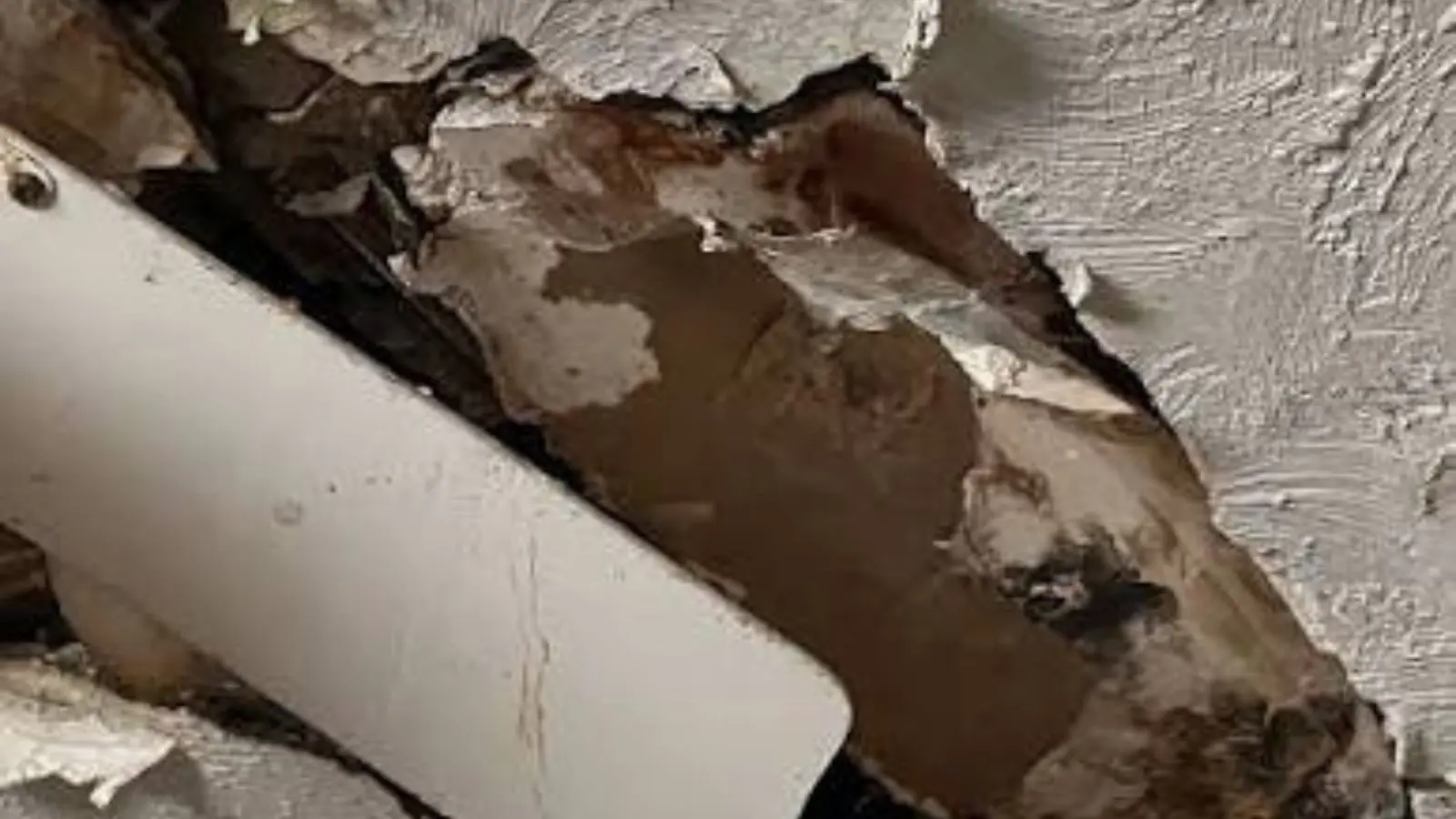
A brown ring on the ceiling tells you where water arrived, not where it started. Water runs along joists, pipes and the top of drywall before it finds a spot to drop, so the stain can sit several feet from the actual leak. People who patch and paint without tracing the source often see the same stain return, and by then the insulation above has stayed wet for weeks.
This guide walks through how leaks are traced, what clues to look for and when it makes sense to stop guessing and have moisture readings taken. It is meant to help you describe the problem clearly to a technician, and to avoid spending money on repairs that have no chance of lasting.
Start With the Pattern, Not the Stain
Look at the shape and the timing. A round stain that grows slowly and appears after rain points toward the roof, a flashing or a window. A stain that appears after someone uses the shower or runs the washer points toward a drain or a supply line.
A stain directly below a bathroom, kitchen or laundry room almost always has a plumbing cause. Multiple stains in a line often follow a single pipe or a joist.
- Stains only after rain suggest a roof, flashing, vent pipe or exterior wall opening.
- Stains after bathing or laundry suggest a tub, shower pan, drain or supply connection.
- Constant dripping that never stops suggests a pressurized supply line or a leaking water heater above.
- Stains near a light fixture or fan suggest water traveling along wiring or ductwork.
- Stains in winter near an exterior wall suggest condensation, ice buildup or a vent problem.
None of these is a diagnosis. They narrow the search, and a technician with a moisture meter can confirm the path.
Check What Is Above the Stain
Walk upstairs or into the attic and look at everything above the stained spot. In a two-story house, that means the bathroom, laundry or kitchen directly overhead. Look for water around the base of the toilet, under the sink, behind the washer and around the tub. Press gently on caulk and flooring for softness. A floor that gives under your foot near a fixture is a strong clue.
In the attic, look at the underside of the roof deck, around vent pipes and chimneys, and at the insulation. Dark or compressed insulation is a clue. So is a line of staining on the wood. Take photos so you can compare them later.
Safety First
If the ceiling is bulging or sagging, keep people out from under it. A bulge is holding water, and the drywall can fall without warning. Poke a small hole only if you can stand clear, and set a bucket underneath to catch the water.
If water is near a light fixture or an outlet, turn off power to that circuit at the panel before going near it. If you cannot reach the panel without stepping in water, call the electric utility or 911.
Plumbing Leaks and Roof Leaks Look Different Inside
| Clue | Likely plumbing | Likely roof or exterior |
|---|---|---|
| Timing | Follows water use | Follows rain or snowmelt |
| Location | Below a bath, kitchen or laundry | Below roof edges, vents or chimneys |
| Stain behavior | Can stay damp in dry weather | Dries out between storms |
| Water bill | May rise without explanation | Unchanged |
| Smell | Can be musty or sewer-like | Usually damp or earthy |
A table of clues. A moisture reading confirms what the pattern suggests.
One useful test is the water meter. With every fixture and appliance off, check the meter, wait twenty minutes and check again. If it moves, a supply line is leaking somewhere. If it does not move, the leak may be drain, roof or condensation related.
What a Technician Adds to the Search
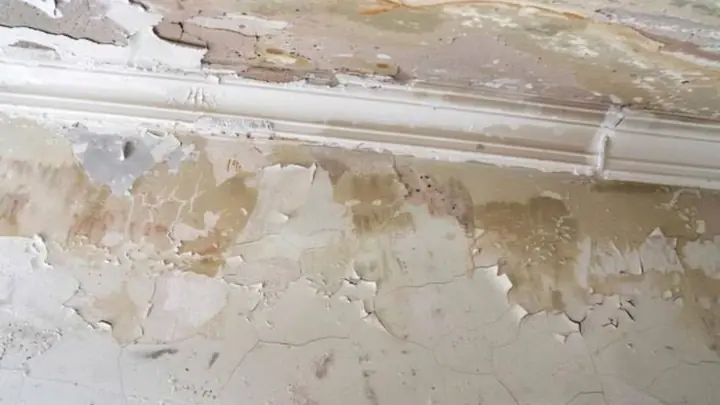
Moisture meters read dampness in drywall and wood without cutting into it. Thermal imaging cameras show temperature differences that can reveal a wet area behind a surface. Together they map where the water has traveled, and that map often leads to a different spot than the stain suggests. Once the wet area is known, a small inspection opening is cut and the source is confirmed visually.
That step also tells you how far the damage goes. The area that needs drying is usually larger than the visible stain, and the insulation above a leak holds water long after the drip has stopped. Drying is covered on our water mitigation page, and the rebuild afterward is covered under water damage repair.
Can't tell where the water is coming from? Call the 24/7 line and describe the stain.
☎ Call (301) 936-0619Utility Lines and Where Your Responsibility Starts
WSSC Water provides water and sewer service in Hyattsville and most of Prince George's County, and says the property owner maintains the sewer service from the property line to the building. That matters if a ceiling stain traces back to a drain or a backup, because the line inside and up to the building is the owner's to fix.
If the water is sewage, WSSC Water's 24-hour sewer backup line is 301-206-4002. Our pages for Hyattsville and Beltsville cover local details for those towns.
Why Repairing the Stain First Backfires
Painting over a stain with stain-blocking primer hides the evidence and does nothing to the wet insulation above it. Replacing drywall before the source is fixed means the new board gets wet too. Even a correct repair fails when the framing above is still damp, because moisture lifts tape and paint from the inside.
The reliable order is simple. Stop the source, dry the structure to confirm readings, remove what cannot be dried and then rebuild. Skipping steps costs more later.
What to Gather Before You Call
- When you first noticed the stain, and whether it has changed size.
- Whether it appears after rain, after showers or at random.
- What is directly above the stain, such as a bathroom, attic or roof edge.
- Whether you have shut off any water, and where the shutoff is.
- Photos of the ceiling, the room above and any visible pipes or fixtures.
Check your policy and ask your insurer what applies. Photos, readings and a clear timeline help any claim, and we document them for you.
Ceiling stain growing? Describe it to a technician now.
☎ Call (301) 936-0619Where the Guidance Comes From
The steps for tracing a leak and drying the cavity reflect ANSI/IICRC S500 practice. For sewer lines, WSSC Water publishes the owner responsibility rules and runs a 24-hour line at 301-206-4002.
Ceiling Leak Questions
Timing is the best clue. Stains that appear after rain suggest the roof or exterior. Stains that appear after bathing, laundry or dishwashing suggest plumbing. A moisture reading confirms the path.
Painting hides the mark but does not address the cause or the wet insulation above. If the source is still active, the stain will return, and the hidden moisture can damage the framing.
Yes. A sagging or bulging ceiling is holding water and can fall. Keep people out from under it, set a bucket below and call the line.
It helps with supply lines. If the meter moves with everything off, water is going somewhere. If it stays still, look at drains, the roof or condensation.
WSSC Water says the property owner maintains the sewer service from the property line to the building. Inside the building, plumbing is the owner's as well. For a sewage backup, call WSSC's 24-hour line at 301-206-4002.