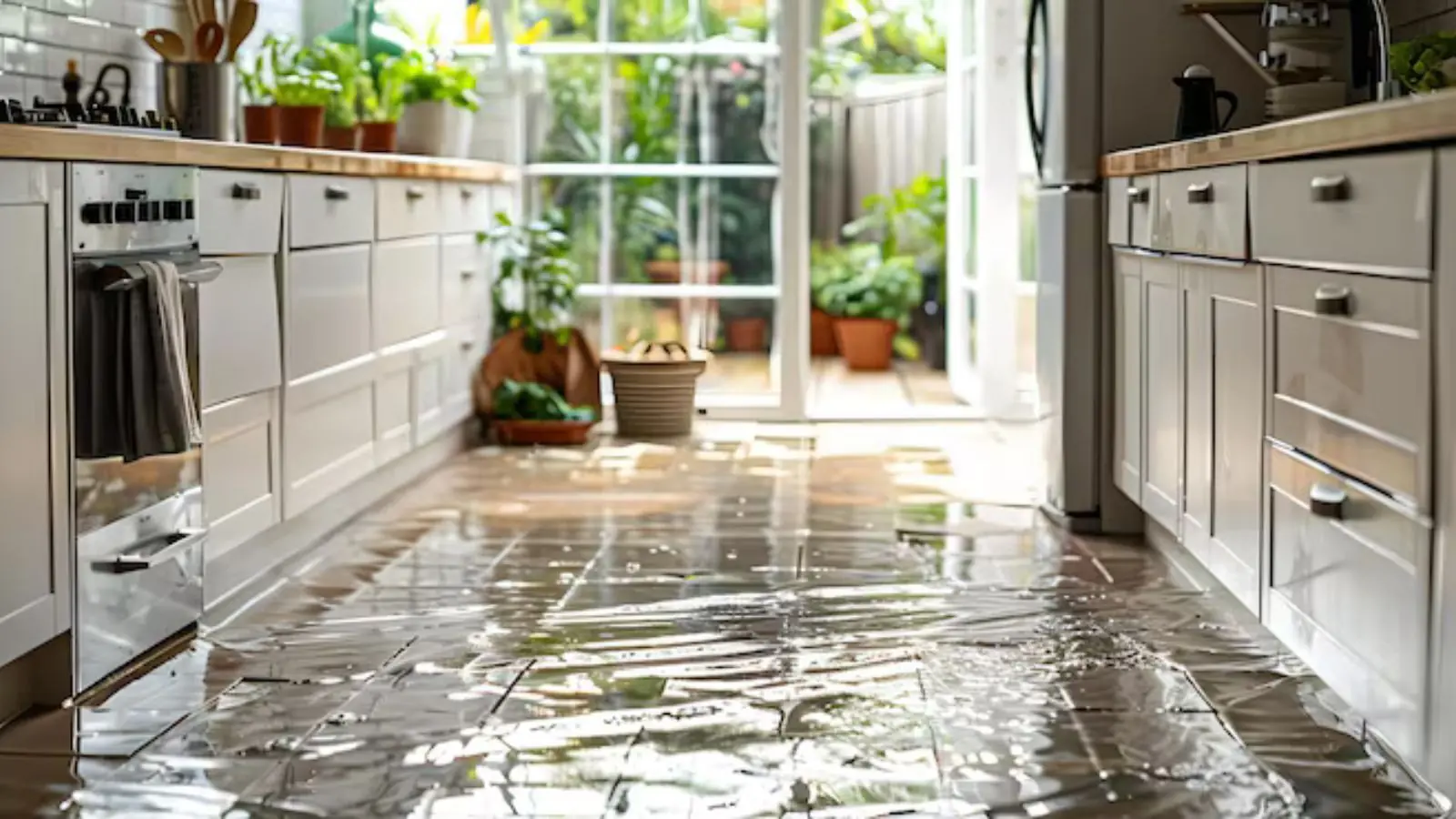
A refrigerator leak rarely announces itself. There is no burst pipe and no sudden flood. Instead there is a small damp patch, a floor that feels slightly soft near the appliance or a faint musty smell when the kitchen is closed up overnight. By the time the problem is obvious, water may have traveled well beyond the refrigerator.
This guide covers where fridge leaks come from, what to do in the first hour, how water moves under kitchen flooring and what proper cleanup involves. It is written for College Park homeowners and renters who want to understand the job before anyone arrives.
Where Refrigerator Leaks Come From
Most refrigerator water damage starts at one of a few places. Knowing which one you have makes the fix and the cleanup more precise.
- The ice maker and water supply line. A small plastic or braided line runs from a valve in the wall to the back of the unit. A loose fitting or a worn line can drip for weeks.
- The defrost drain. Frost melts into a drain and then into a pan under the unit. If the drain clogs with debris or ice, water backs up and spills onto the floor.
- The drain pan. The pan can crack or overflow, especially in older units.
- The water filter housing. A filter that is not seated correctly can leak at the connection.
- The door gasket and condensation. In humid weather a failing seal lets warm air in, and the extra condensation can pool at the base.
The supply line is the one that tends to cause the most damage, because it is pressurized all the time. A pinhole in that line sprays or seeps constantly, while a clogged defrost drain only releases water when the unit cycles.
The First Hour: Stop, Shut Off, Photograph
- Unplug the refrigerator only if the outlet and the floor around it are dry. If water is near the outlet, leave it alone and shut off the circuit at the panel if you can reach it safely. When in doubt, call 911 or the electric utility.
- Close the water supply. Look for the small valve behind or beside the refrigerator, or under the nearest sink. Turn it clockwise until it stops.
- Take photos and short video before you mop. Show the appliance, the floor, the cabinets and any stains on the wall behind it. Your insurer may ask for them.
- Move food to a cooler if the unit has been off for hours. Throw out anything that has been in a warm refrigerator for too long, using the labeled guidance on the package and food safety advice from public health sources.
- Pull the unit out only if it is safe to do so. A full refrigerator is heavy, and dragging it can tear flooring or snap the supply line. If it will not move easily, leave it for the crew.
Do not use a household vacuum on wet floors, and do not turn on ceiling fans to push moisture around. Both can make the situation worse. Towels and a mop can lift surface water, but they do not reach what is below the flooring.
Where the Water Goes
Kitchen floors hide layers. Vinyl or laminate sits on underlayment, which sits on a subfloor, and cabinets are usually set on top of the finished floor or directly against the subfloor. Water that spreads under the surface can wick into the base of cabinets, behind baseboards and into the wall cavity behind the refrigerator.
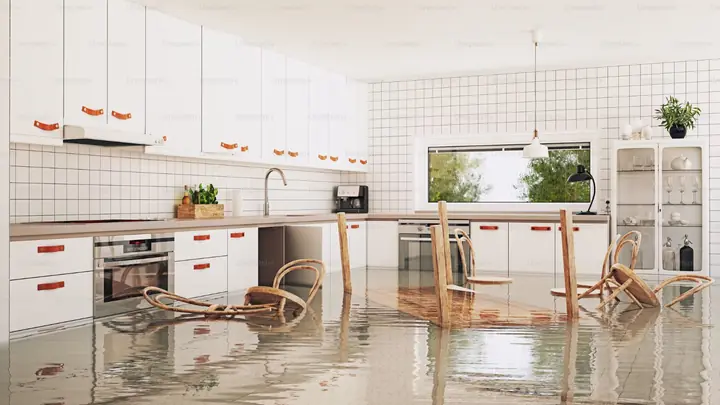
That is why a fridge leak that looks like one wet square foot can turn out to involve a whole kitchen wall. A moisture meter and a thermal camera show what the eye cannot. A technician reads the wall and floor at several points, marks the wet area and tracks whether it is growing.
| Material | What water does | Typical response |
|---|---|---|
| Vinyl plank or laminate | Seams swell, edges lift, water sits under the boards | Lift boards in the wet zone and dry the layer below |
| Sheet vinyl | Water gets trapped under the sheet and rides along the seams | Cut and peel back, then dry the subfloor |
| Tile | Surface stays dry, but grout and subfloor can hold water | Test moisture in the subfloor, dry with air movers if needed |
| Cabinet toe kicks and bases | Particleboard swells and does not recover | Remove toe kicks to dry, replace swollen bases |
| Drywall behind the unit | Wicks water upward, paint bubbles or stains | Check with a meter, cut out and dry or replace if saturated |
The right response depends on moisture readings at your address.
What Proper Drying Looks Like
Wiping up the visible water is the beginning. The goal is to bring every affected material back to its normal moisture level. That usually means removing toe kicks, pulling back a few flooring boards and setting air movers and a dehumidifier to run for several days. Readings are taken each day, and the equipment stays until the numbers match a dry reference.
Our water damage cleanup page explains how soaked materials are sorted into dry and replace piles, and how cleaning and odor control follow. For a leak that has already wet a large area, water mitigation covers the extraction and structural drying that comes first.
A slow leak can be wetter than it looks. Describe what you see and we will explain the first steps.
☎ Call (301) 936-0619Renters, Landlords and Shared Walls
In an apartment or a rental house, the refrigerator may belong to the landlord, and the leak may reach a neighbor. Tell your landlord in writing as soon as you find the problem, and keep a copy. Photographs with timestamps help everyone later. Do not remove materials that you do not own without asking, but do not leave standing water for days either.
Co-op homes in Greenbelt
Greenbelt Homes, Inc. is a cooperative of 1,600 homes, and its members own the co-op together and share its costs. If your refrigerator leaks in a co-op unit, check your cooperative's rules on who handles repairs and insurance, and tell the maintenance staff as well as your insurer. Ownership rules like these decide who calls whom. Our Greenbelt page has more on the town's housing.
Signs the Leak Has Been Going On for Weeks
Some leaks are found on day one. Others are found after the flooring has already gone bad. Watch for a floor that feels springy near the refrigerator, a baseboard that has started to separate from the wall, paint that bubbles above the baseboard or a smell that returns whenever the kitchen is warm. A cabinet door that sticks near the refrigerator can also point to swollen wood.
Dark spots on the underside of a cabinet base or on the back of a toe kick can mean moisture has been present for a while. If you see them, avoid scrubbing or spraying. Describe them to the technician, who can decide whether the area needs containment. Our Hyattsville page covers older kitchens where this shows up often.
Preventing the Next Leak
- Replace a rubber or plastic ice maker line with a braided metal line, and swap it on a regular schedule.
- Clean the defrost drain and the pan under the unit when you deep clean the kitchen.
- Pull the refrigerator out once a year and check the floor behind it.
- Know where the supply valve is, and test that it turns.
- Use a small water alarm on the floor near the unit. Cheap sensors can warn you early.
None of these steps cost much, and any one can catch a leak before it reaches the subfloor. If you are replacing a refrigerator, ask the installer to check the shutoff valve at the same time, because an old valve that will not close is a common reason a small leak becomes a big one.
Insurance and Documentation
Check your policy for how it treats sudden leaks and long-term seepage. Policies differ, and a slow leak is often handled differently from a sudden one. Photographs, moisture readings and notes about when you found the water help your insurer understand the loss. We document the job. Your insurer decides coverage.
Not sure whether the floor is salvageable? Call the 24/7 line and describe the surface, the age of the leak and the damp area.
☎ Call (301) 936-0619Guidance We Rely On
Water from an appliance supply line is usually treated as clean water in ANSI/IICRC S500 terms when caught early. FEMA's cleanup guidance advises throwing out food and items that cannot be cleaned after contact with water.
Refrigerator Leak Questions
Mold needs moisture and time. A leak that stays damp for more than a day or two under flooring or inside a cabinet base gives it both, which is why drying quickly matters. If you see dark spots or smell something musty, describe it on the call and a technician will explain next steps.
Only if the outlet and the floor around it are completely dry. If water is near the outlet, do not touch it. Shut off the circuit at the panel if it is safe to reach, or call 911 or the utility.
It depends on how far the water traveled and what materials it reached. Many jobs need several days of air movers and dehumidification, with moisture readings taken each day to confirm progress.
It depends on your policy and on how the leak is classified. Sudden leaks and slow seepage are often treated differently. Check your policy and ask your agent, and keep photos and notes.
Call the co-op's maintenance line and your insurer, and then call us for drying if the floor or cabinets are wet. Co-op rules vary, so ask which repairs the co-op handles and which are yours.