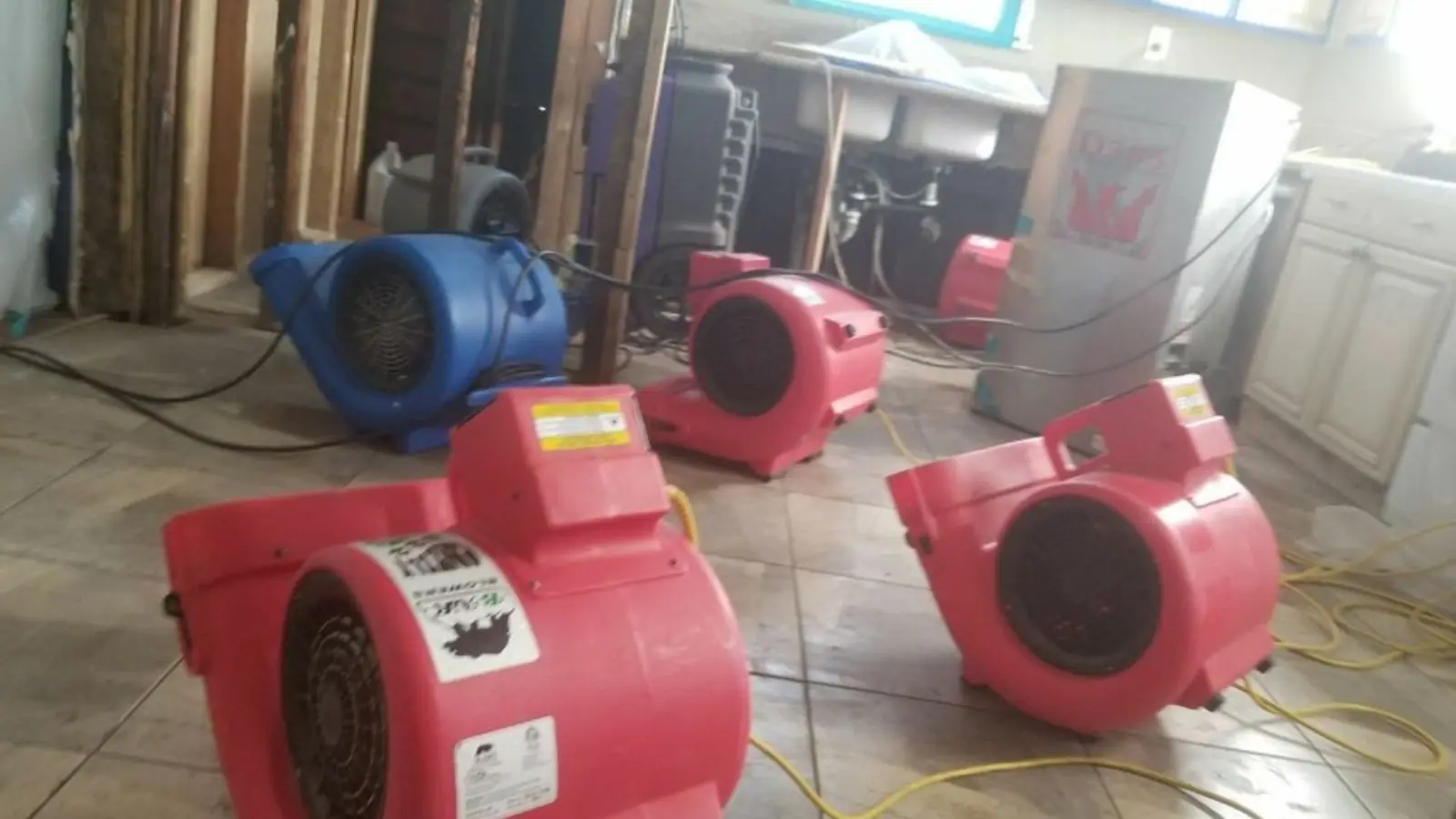
After water is removed from a building, much of it remains. It sits in drywall, in framing, in subfloors, in insulation and in the air itself. Structural drying is the part of restoration that targets that hidden moisture. When it is done well, the building returns to its normal moisture level and later problems, such as warping and mold, become much less likely.
This guide explains how structural drying works, what equipment is used, how progress is measured and what to ask any company that offers it. It is meant to help you read a scope of work, not to replace the findings of a technician at your property.
Why Surface Dry Is Not Dry
A wall can feel dry to the touch and still hold water. Paint and wallpaper act as barriers, and water trapped in drywall, framing or insulation cannot escape unless the conditions let it. The EPA advises drying water-damaged areas and items within 24 to 48 hours to prevent mold growth, which is why drying begins as soon as extraction ends.
Moisture moves from wet materials to dry air. The more air that passes over a wet surface, and the drier that air is, the faster the water leaves. Drying equipment is designed to create exactly those conditions.
The Four Parts of a Drying Job
- Find the water. Moisture meters and thermal cameras map where moisture sits, including places you cannot see. A moisture map marks the edge of the wet zone and gives the crew a baseline.
- Remove what cannot be dried. Some materials, such as soaked insulation, ceiling tiles and saturated carpet pad, hold water too stubbornly to dry in place. They are removed so they do not feed moisture back into the structure.
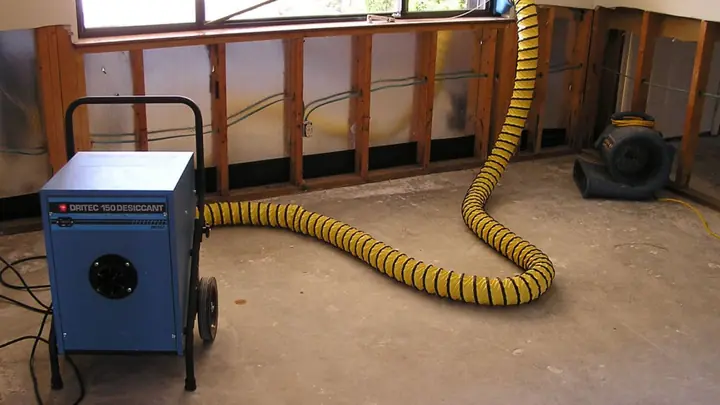
- Dry what can be saved. Air movers push air across wet surfaces. Dehumidifiers pull water out of that air. Specialized equipment can dry wall cavities and floor systems from within.
- Measure until it matches. Technicians return daily, take readings at the same points and compare them with a dry reference. The equipment stays until the numbers match.
The Equipment, Explained
| Equipment | What it does | Where it is used |
|---|---|---|
| Air movers | Move air across wet surfaces to speed evaporation | Floors, wall bottoms, ceilings, carpet |
| LGR dehumidifiers | Pull moisture from the air so more can evaporate from materials | Whole rooms and sealed work zones |
| Desiccant dehumidifiers | Dry air in cold or very damp conditions | Large losses and cold weather |
| Injection or cavity drying systems | Push dry air into wall cavities and under floors | Walls with intact finishes, hardwood floors |
| Moisture meters | Measure moisture content in materials | Every job, every visit |
| Thermal cameras | Show temperature differences that can indicate moisture | Mapping and checking |
Equipment choice depends on the materials, the amount of water and the conditions in the building.
You may hear your technician refer to drying classes and water categories. These come from the ANSI/IICRC S500 industry standard, which describes how water damage restoration is done. Class describes how much moisture the materials hold, and category describes how clean or contaminated the water was. Both change the plan.
Wondering whether your walls are really dry? Call the 24/7 line and ask how readings are taken.
☎ Call (301) 936-0619How Long Drying Takes
There is no single number. A small, quick leak in a well-ventilated room may need a few days. A larger loss with saturated materials, high humidity or cold temperatures can take longer. Drying slows as the last moisture leaves, so the final readings are what matter, not how many days have passed.
Ask for the daily readings. A good drying log shows the wet spots getting drier each day. If the numbers stall, the technician should adjust the equipment, open another cavity or investigate whether a hidden source is still adding water.
What You Can Expect in Your Home
- Noise. Air movers and dehumidifiers are loud. Expect it to run around the clock.
- Warmth. Dehumidifiers add heat, so rooms can feel warm.
- Access. Technicians need to remove baseboards, drill small holes in some cavities or lift floor edges. This is normal.
- Daily visits. Readings are taken each day, and equipment may be repositioned.
- A higher power bill. Equipment uses electricity. Mention it to your insurer.
Keep doors and windows closed in the drying zone, and do not turn off equipment. Pets and children should stay out of the work area. If you need to move equipment, call before you do so, because even a small change in airflow can affect results.
Creek lowlands and older streets in College Park
College Park sits where Paint Branch and Indian Creek meet to form the Northeast Branch of the Anacostia River, and the University of Maryland covers about 41 percent of the city's surface.
That mix of creek lowlands, older streets and busy rental housing means drying jobs here range from a single-room leak to a basement that has taken on water. Humid summers add to the load. The EPA advises keeping indoor humidity low, and a dehumidifier running in a basement can help after the structure is dry.
Drying Versus Cleanup Versus Repair
These are different stages. Drying brings the structure back to its normal moisture level. Cleanup removes damaged materials, sanitizes and controls odor. Repair rebuilds what was removed. They overlap in practice, but they should not be skipped or reordered. New drywall installed over a damp cavity invites problems.
Our water mitigation page covers extraction and drying in more detail, and the water damage cleanup page explains what follows. If you are in the nearby town of Hyattsville or Greenbelt, the same process applies, though the housing is different.
Questions to Ask Any Drying Company
- How will you map the moisture, and will I see the map?
- What readings will you record, and how often?
- What is the dry reference you compare against?
- Which materials will you remove and which will you dry in place?
- How will you tell me when drying is finished, and what will you leave behind as proof?
Check your policy for how drying costs are handled and keep the drying log with your claim file. We document the job, and your insurer decides coverage.
Water in the walls? Call the 24/7 line and describe what got wet.
☎ Call (301) 936-0619Structural Drying Questions
It is the process of removing moisture from walls, floors, framing and other building materials after water is extracted. It uses air movers, dehumidifiers and daily moisture readings.
When readings in the affected materials match a dry reference from an unaffected area. Ask to see the log with daily numbers.
Drying needs a lot of airflow and dehumidification to work quickly. The equipment is sized to the amount of water and the materials involved.
Household equipment helps with small, surface-level moisture. It rarely reaches water inside walls or floor systems, and without readings you cannot tell when drying is finished.
If water reached the walls, framing or floor, yes. Call before cleaning, take photos, and ask a technician to map the moisture. Use the FEMA flood map and your insurer to check flood coverage questions.