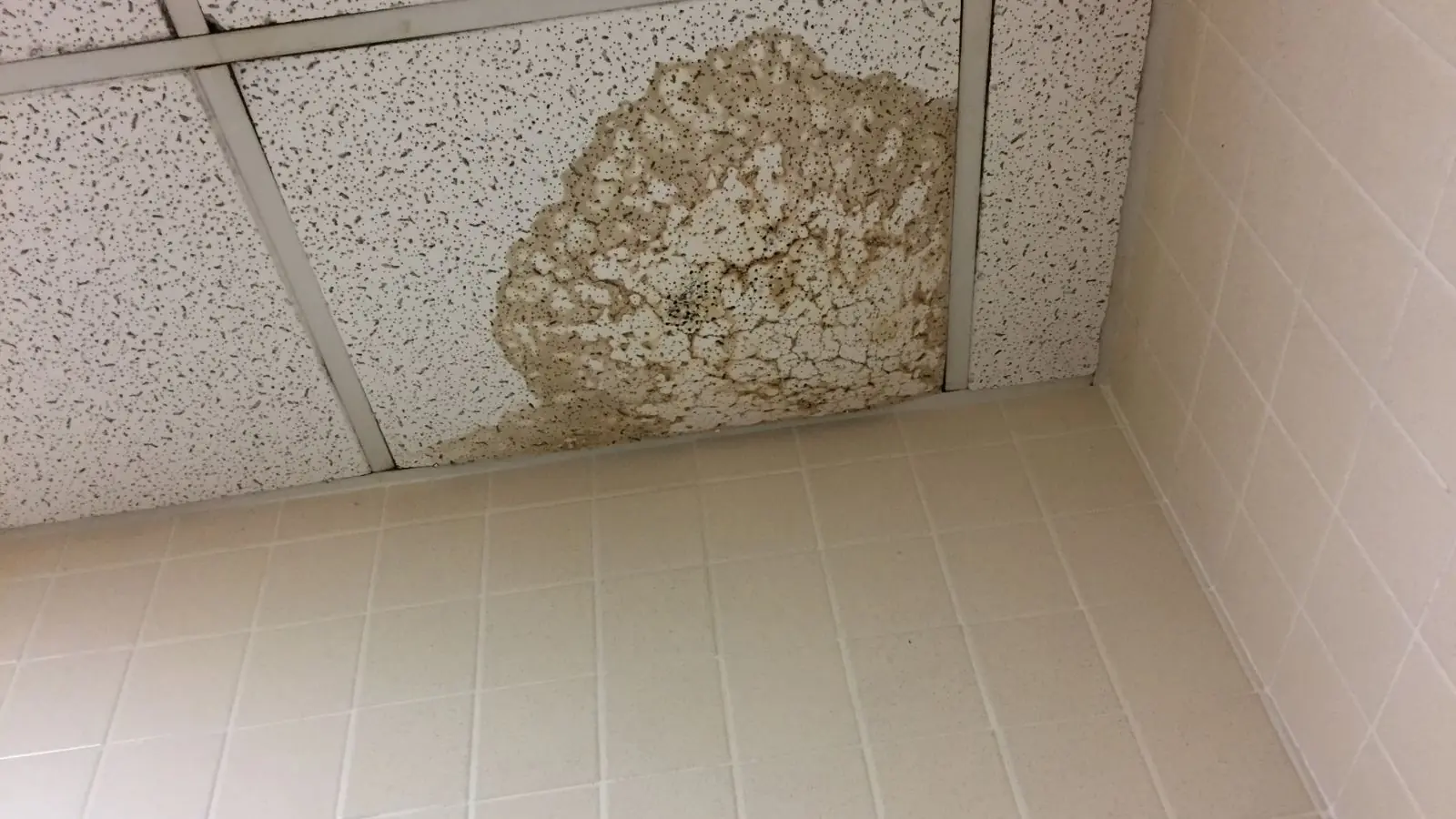
A brown stain on the ceiling looks bad, but it may be old and dry. A ceiling that looks fine can be holding a pocket of water. The question people ask is simple. Is it safe to stay under it, or do I need to act right now? This guide gives you a way to sort what you see before you decide.
It is about triage, not repair. Other guides cover how ceilings are rebuilt. Here the goal is to tell the difference between a ceiling that needs immediate action and one that can wait a day for a proper assessment.
Act Now: Signs of Immediate Danger
Some signs mean you should leave the room and get help right away. Do not wait to see if they improve.
- A ceiling that is bulging, sagging or bowed downward. Water may be pooled above it, and the weight can bring the drywall down.
- Water actively dripping or running through a light fixture, a fan or an outlet. Stay out of the room and shut off power at the panel if you can do so safely. Call 911 or the electric utility if you cannot.
- A cracking or popping sound from the ceiling.
- Plaster that is separating from lath, or large sections of drywall tape that have let go.
- A smell of gas. Leave the building and call 911 from outside.
If a ceiling is bowed, do not stand under it and do not push on it. Move people and pets out of the room. If you can reach the source without standing under the bulge, shut off the water. A technician can release trapped water in a controlled way, and that is not a do-it-yourself job.
Call Soon: Signs You Need an Assessment Within Hours
These signs mean water is present and probably still affecting the structure, but they are not immediate collapse risks.
- A wet, spreading stain that grows when you check it an hour later.
- Paint that bubbles, peels or looks wet to the touch.
- Water running down a wall from the ceiling line.
- A ceiling that feels soft when you touch it lightly with a broom handle from the side.
- A musty smell that appeared with the stain.
In these cases, call for an assessment the same day. The ceiling cavity may hold insulation that soaks up water and holds it against the drywall. Insulation that stays wet keeps the ceiling wet long after the leak stops.
Not sure which category your ceiling is in? Describe what you see and we will help sort it.
☎ Call (301) 936-0619Monitor: Signs That Can Wait a Short Time
A dry, flat stain with a clear edge and no active drip may be old. You can track it by drawing a light pencil line around the edge and checking it over a few days. If the edge moves, the leak is active. If the stain is the same size and dry, the leak may have stopped, but you should still find out where it came from.
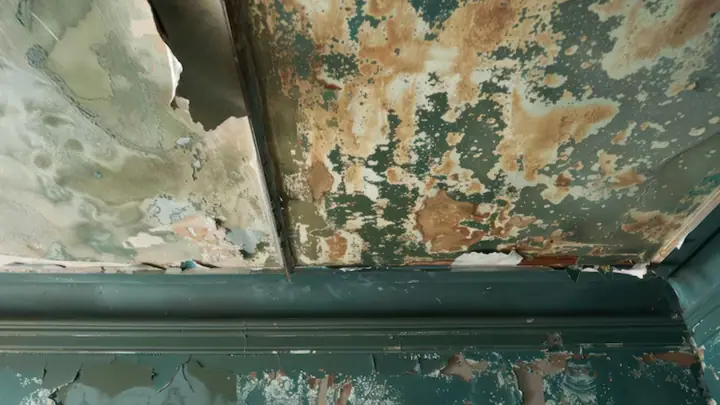
Stains that return after heavy rain point to a roof or flashing problem. Stains that appear after someone showers upstairs point to a bathroom leak. Stains that appear in winter after a cold snap point to a frozen or split pipe. Matching the timing to the event helps a technician find the source faster.
| What you see | Likely urgency | First move |
|---|---|---|
| Bulging or sagging ceiling | Act now | Leave the room, shut off water, call for help |
| Water through a light or outlet | Act now | Stay out, shut off the circuit, call 911 or the utility |
| Growing wet stain | Call soon | Photograph, protect belongings, call the same day |
| Soft spot, peeling paint | Call soon | Do not poke, mark the edge, call |
| Dry stain, edge not moving | Monitor | Mark the edge, find the source, check again |
This is general triage. A technician's on-site findings come first.
Why Ceilings Fail Without Warning
Drywall is gypsum between two sheets of paper. When it gets wet, it loses strength, and the weight of the water and any insulation above it can pull the screws or nails through. Plaster ceilings can hold water for longer but fail suddenly when the plaster keys let go of the lath.
Ceilings below bathrooms, kitchens and laundry rooms carry the highest risk because supply lines, drains and appliances sit above them. Ceilings below attics fail when a roof leak soaks the insulation, and the insulation then acts like a sponge.
Older homes in Beltsville
An electric streetcar line along what is now Rhode Island Avenue spurred subdivisions around Beltsville, and early houses were Victorian and Colonial Revival. Modest side-gable homes followed in the 1930s and 1940s, and postwar neighborhoods came after. Plaster ceilings and older wiring are more common in the earlier houses, which makes the electrical caution above matter more. The Beltsville page covers local housing eras in more detail.
What Not to Do With a Wet Ceiling
- Do not cut a hole under a bulge unless a professional directs you. Released water comes down all at once.
- Do not cover a stain with paint. Paint hides the sign and traps moisture.
- Do not turn on a ceiling fan or light that sits beneath water.
- Do not climb into the attic or crawl space if you cannot check for wiring, loose boards and insulation.
- Do not wait for the stain to dry and call the problem solved. The source is still there.
What an Assessment Includes
A technician checks the ceiling with a moisture meter and, often, a thermal camera. They look at the room above, the attic or the roof, and they map where the moisture is. If the ceiling is holding water, they release it in a controlled way, usually by making a small opening, and then dry the cavity. Wet insulation is removed because it holds water against the structure.
Once the cavity is dry, repair becomes a separate decision. Our water damage repair page explains what rebuilding a ceiling involves, and water mitigation covers the drying that comes first. The Greenbelt page covers local conditions for older homes there.
Insurance and Documentation
Take photographs of the stain, the room and anything that was damaged, before you move or clean. Note the date and time you first saw the problem. Check your policy and call your insurer early. We document moisture readings and the work performed, and your insurer decides coverage.
Ceiling sagging or dripping now? Call the 24/7 line and tell us what you see.
☎ Call (301) 936-0619Guidance Behind the Triage
The caution about sagging ceilings and electrical fixtures reflects common safety guidance, and the drying advice follows ANSI/IICRC S500. When in doubt, stay out of the room and call.
Ceiling Safety Questions
A dry, stable stain with no sag is usually not an immediate hazard, though you should find the source. A bulging, dripping or soft ceiling is not safe to stand under.
A ceiling that has been soaked can lose strength, and wet insulation above it can keep it loaded. A technician checks before you assume it is safe.
No, unless a professional tells you to. Water can come down all at once, and you may be standing under it. Technicians release it in a controlled way.
Draw a light pencil line around the edge of the stain and check it later. If the stain grows or the paint stays damp, water is still coming in.
Plaster can hold water longer and then let go suddenly when the plaster keys separate from the lath. Do not stand under a bowed section, and ask a technician to assess it.