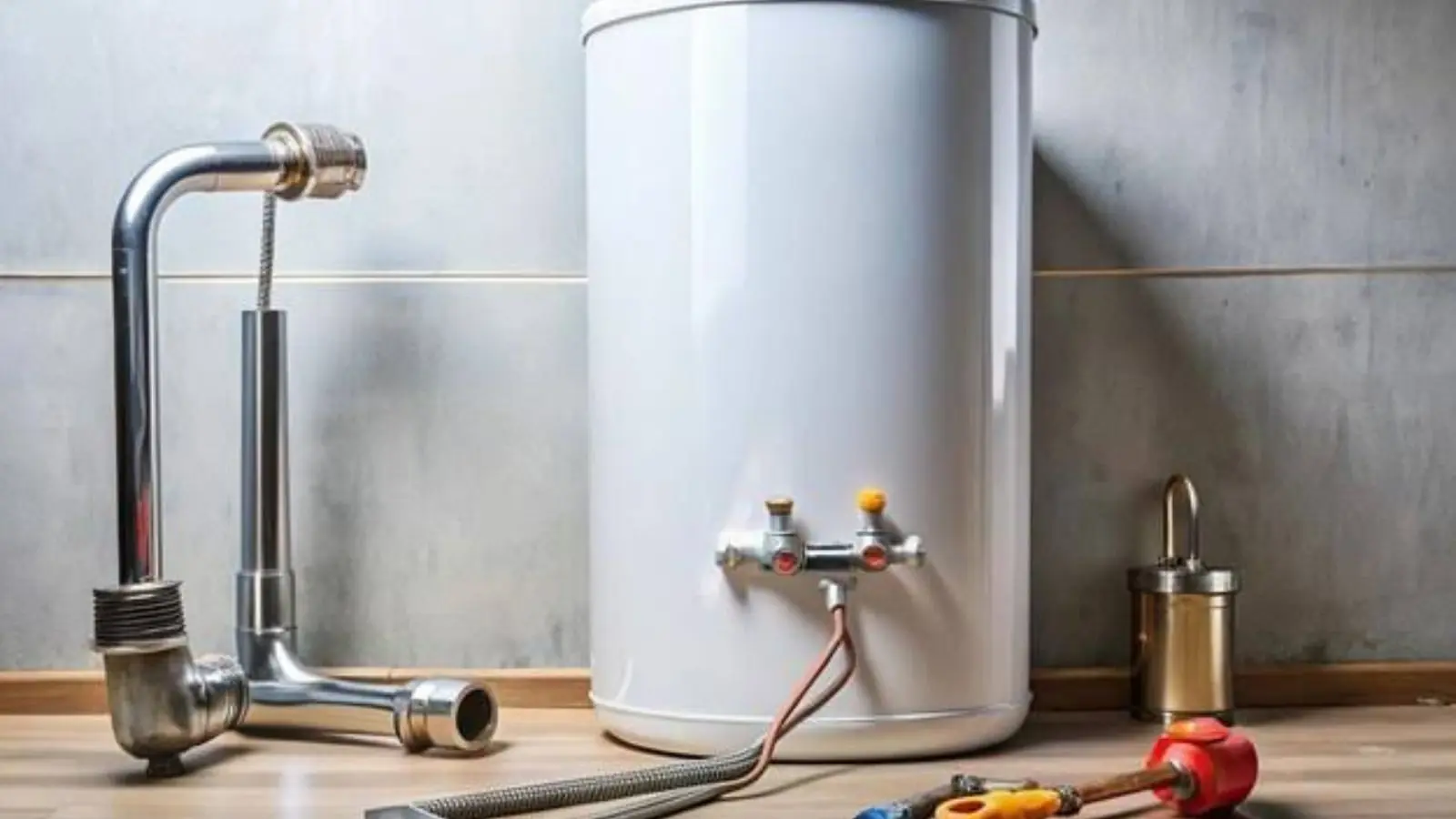
A water heater leak comes from the tank, the supply connections, the relief valve or the drain valve. Most tanks hold forty to eighty gallons, so a failed tank can flood a utility room fast. We remove the water, dry the building and clean up. A licensed plumber replaces or repairs the heater. Call (301) 936-0619 for the water.
Where Water Heaters Sit in College Park Homes
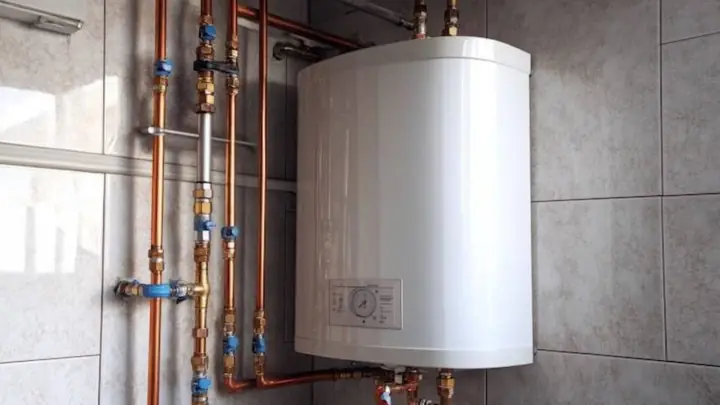
In houses with a basement, the heater often sits near the furnace, a floor drain or a laundry sink. In apartments and townhouses it may sit in a utility closet beside living space, so a leak soaks carpet and wall bottoms before anyone notices. Where it sits decides how far the water travels.
According to the U.S. Census Bureau, about 34 percent of College Park homes are owner-occupied. That leaves most households renting, and tenants often do not see the tank until it fails. If you rent, tell the landlord in writing as soon as you see water.
Signs of a Leaking Water Heater
| What you see | Likely source | What it means |
|---|---|---|
| Slow puddle around the base | Tank corrosion or a bottom fitting | Often a sign the tank is near the end of its life |
| Drip from a pipe on the side | Relief valve discharge | Can mean excess pressure or temperature |
| Wet floor at the connections | Loose or corroded supply fittings | A plumber can often fix these |
| Rust-colored water | Interior tank corrosion | A leak may follow |
| Dripping from the drain valve | Worn valve | Usually a quick plumbing repair |
A technician can read the damage, and a plumber decides whether to repair or replace the heater.
Water heater leaking now? Call the 24/7 line and describe where the water is going.
☎ Call (301) 936-0619Safety Steps Before You Touch a Leaking Heater
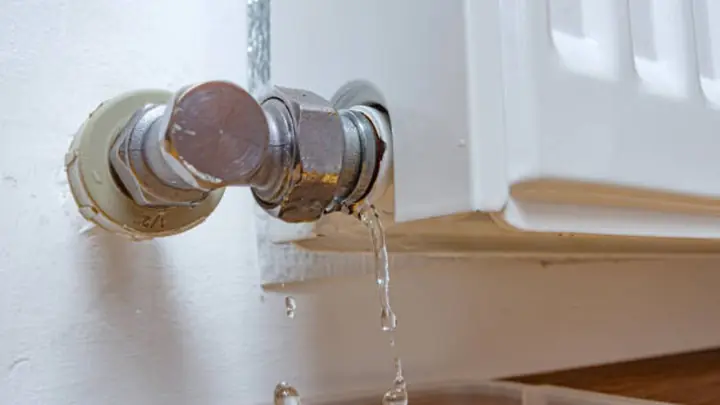
Shutoff order matters
For an electric heater, switch off the breaker if you can reach the panel while standing on a dry surface. If the floor around the panel is wet, stay out and call the electric utility or 911. For a gas heater, turn the gas control to off or pilot, and leave the building if you smell gas.
Close the cold-water supply valve above the tank. Hot water from the tank can scald, so keep children and pets away and do not touch a draining hose. WSSC Water recommends knowing where your main valve is, in case the supply valve fails.
- Turn off power or gas to the heater.
- Close the cold supply valve above the tank.
- Keep clear of hot water from the tank or relief pipe.
- Move boxes, rugs and stored items off the wet floor.
- Photograph the tank, label and wet area before cleanup.
Heater stopped and water still on the floor? Call and we will start extraction.
☎ Call (301) 936-0619What Restoration Does After the Heater Is Stopped
Once the source is off, we remove standing water with pumps and extraction units. Then a technician checks nearby drywall, baseboards, flooring and stored items with a moisture meter. Heaters usually sit against a wall and over a slab, so the wet area is often a ring around the base and a stripe up the wall.
Air movers and low-grain-refrigerant dehumidifiers dry the room. Wet drywall near the floor is often cut a few inches above the water line to let air reach the cavity. Readings are repeated until the area meets its dry standard. Industry guidance sits in the ANSI/IICRC S500 standard, and it is fair to ask any company how it follows it.
- Confirm the heater is off and the supply is closed.
- Extract standing water.
- Take moisture readings in nearby walls and floors.
- Remove soaked pad, drywall or insulation that cannot dry in place.
- Dry the room with measured air movement and dehumidification.
For wider cleanup after the drying is done, see water damage cleanup. If the area stays damp, mold remediation explains the next step.
Working With the Plumber
We do not repair or replace water heaters. When a technician sees a failed tank or a leaking fitting, we advise calling a plumber. The two jobs run side by side. Prince George's County's plumbing permit page says permits are generally not required to replace fixtures except water heaters and testable backflow devices. It states that WSSC Water issues plumbing permits, so ask your plumber how that applies to your replacement.
WSSC Water also offers a finder for registered plumbers on its website. Having a plumber confirm the cause helps the insurance record, since it shows whether the failure was sudden.
What Changes the Cost of Heater Leak Cleanup
- How much water escaped and how long it ran.
- Whether it reached carpet, finished walls or stored items.
- Whether the heater is in a basement, closet or crawlspace.
- Whether drywall or flooring must be removed.
- How many days of drying the readings call for.
A small fitting drip is a short job. A tank that lets go overnight in a finished basement is far larger. We explain the scope and the price first.
Insurance and a Failed Water Heater
Many homeowner and renter policies treat a sudden tank failure as water damage, while a slow leak over a long time may be treated differently. Policies often leave out the cost of replacing the failed part itself. Check your policy and ask your insurer, and keep the old heater label and any plumber invoice with your photos.
College Park Notes on Water Heaters
The Prince George's County plumbing permit page says permits are generally not required for replacing plumbing fixtures, except water heaters and testable backflow devices. County sources note that WSSC Water issues plumbing permits.
The U.S. Census Bureau counts about 34 percent of College Park homes as owner-occupied, so renters are the majority and the landlord often owns the tank.
WSSC Water maintains a registered plumber finder for customers who need a plumber.
Mistakes to Avoid
- Opening the relief pipe to drain the tank without protecting the floor.
- Relighting a gas heater after a flood without a plumber's check.
- Replacing the heater and skipping the drying of the wall behind it.
- Throwing away wet stored items before photographing them.
Tank gone and the floor wet? Call the 24/7 line for removal and drying.
☎ Call (301) 936-0619We serve Hyattsville and Beltsville the same way.
Water Heater Leak Questions
Yes. The line at (301) 936-0619 is answered at any hour. Same-day response is offered when available, and no arrival time is promised over the phone.
No. We handle water removal, drying and cleanup, and we suggest a plumber for the heater itself. Prince George's County says water heater replacement is an exception to its fixture permit rule, so ask the plumber.
It can be very hot. Keep people and pets back, turn off power or gas, and do not touch a draining pipe. Cold water above the tank can be closed first.
Call the landlord or building manager in writing, then call us so drying starts. Water can travel to neighbors below.
A plumber decides that. We dry the building and recommend that you do not rely on a tank that has leaked from its body.